
Laser vision correction
Laser Fit LASEK in Korea: flapless surface laser surgery
LASEK works on the corneal surface, so there is no flap. The clinic describes it as resistant to external impact, with a longer recovery than the other laser options.
Does this sound like you?
- You play contact sports or have a job where eye impact is a risk.
- SMILE or LASIK is not suitable for you, and you want to know your options.
How Laser Fit LASEK works
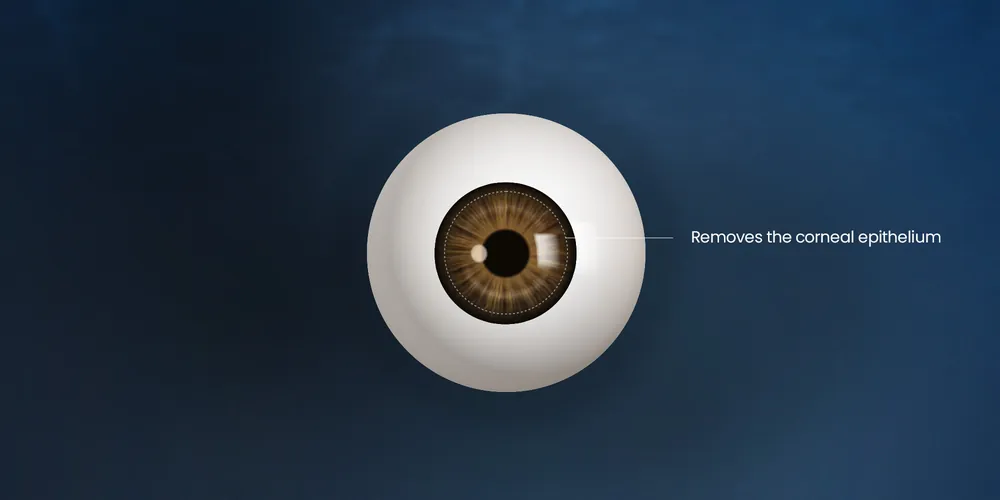
LASEK is a subepithelial ablation (layer removal): the surface layer is removed and the cornea is reshaped. The clinic performs it using laser or a doctor-controlled brush, without blades or harsh medication, and with less corneal tissue loss.
- High preciseness, with less tissue lost.
- According to the clinic, helps prevent corneal opacity and fuzzy night vision.
- The laser is applied without a mild ethanol solution, to reduce injury.
- Resistant to external impact.
What to expect
Recovery is slower than SMILE or LASIK. The clinic lists 5–7 days, with pain for a few days. Plan extra days in Seoul.
| SMILE LASIK | Custom LASIK | Laser Fit LASEK | |
|---|---|---|---|
| Method | Intrastromal lenticule extraction (flapless) | Stromal ablation (flap) | Subepithelial ablation (layer removal) |
| Advantage | Minimum corneal damage, fast recovery | Relatively fast recovery | Resistant to external impact |
| Trade-off | Price | Weaker against external impact | Slow recovery, pain for a few days |
| Recovery | 1 day | 2–3 days | 5–7 days |
LASEK as a second step
If SMILE leaves a small residual error, enhancement with LASEK may be considered, depending on the remaining corneal tissue.
Frequently asked questions
Can my vision worsen again after surgery? Is an enhancement possible?
If vision decreases after surgery, it is most commonly due to myopic regression or dry eye. Myopic regression occurs when changes in the cornea lead to a partial return of nearsightedness and is typically identifiable within days after surgery. Vision changes related to dry eye are more common and may develop due to postoperative dryness, lifestyle factors, or environmental conditions. These symptoms can usually be improved with proper dry eye management and care. If necessary, enhancement options may be considered depending on the amount of remaining corneal tissue. These may include procedures such as LASEK or Implantable Collamer Lens (ICL) surgery. Additionally, presbyopia (age-related difficulty with near vision) is not directly related to whether vision correction surgery has been performed and may still occur naturally over time.
What if I blink or move my eyes during surgery?
During all vision correction procedures, a device called a lid speculum is used to gently keep the eye open, preventing blinking. Eye movement is involuntary and cannot be fully controlled by the patient. To ensure accuracy, advanced laser systems are equipped with eye fixation and tracking technology (such as VisuMax fixation and Amaris Red eye-tracking systems), which monitor and compensate for eye movement in real time. In extremely rare cases where fixation is lost, the surgeon will determine whether to safely continue the procedure or convert to an alternative method such as LASEK, depending on the situation.
What is corneal strengthening treatment?
Corneal strengthening, formally known as Corneal Collagen Cross-Linking (CXL), is a procedure that applies Vitamin B2 (Riboflavin) to the cornea followed by controlled ultraviolet light exposure. This process strengthens the collagen fibers within the cornea. CXL is commonly recommended for patients with thin corneas or those who require significant corneal tissue removal. Strengthening the cornea helps protect against external stress and can prevent or slow the progression of keratoconus and myopic regression. The safety and effectiveness of this treatment have been validated through U.S. FDA approval.
Which vision correction procedure is right for me?
Vision correction procedures include LASEK, LASIK, SMILE, and Implantable Collamer Lens (ICL) surgery. Each option differs based on how the cornea is treated. The best procedure is determined after a comprehensive eye examination, which evaluates factors such as corneal thickness, the amount of tissue that can be safely removed, corneal endothelial cell health, eye anatomy, astigmatism, and overall ocular condition. Your lifestyle and visual needs are also carefully considered before recommending the most appropriate treatment.