Planning your trip
Planning vision correction surgery in Seoul: a trip checklist
From the first message to the check-up afterwards: the steps, the contact lens rules and the airport route, in the order you will meet them.

Laser vision correction
Bright Eye Clinic Gangnam lists 5–7 days of LASEK recovery, with pain for a few days. Your vision can keep settling for weeks after that, so your plan should cover the time after your flight home too.
Building a Korea LASEK recovery plan around one school break, and worried the days won't stretch far enough?
Read this before you pay for the hotel nights.
You'll know what decides the cost, which review claims hold up, how the methods differ and how many days to set aside. That should help you judge whether LASEK fits your eyes, your leave and your budget.
Hello, I'm Dr. Hyun Chul Cheon, Representative Director at Bright Eye Clinic Gangnam. I'm an ophthalmology specialist, and LASEK is one of the procedures I work in.
Our LASEK runs on the Amaris Red excimer laser. We have interpreters for international patients, and we're closed on Wednesdays and Sundays, which matters more to your calendar than you might expect.
I wrote this because many people read a recovery figure as the day their eyes are finished, then build the whole trip on that belief.
Here's the short answer: we list 5–7 days of recovery for LASEK, with pain for a few days. Your vision can keep settling for weeks after that, so plan for both.
If you're sketching a trip now, send your open dates on WhatsApp and ask how many days in Seoul to allow for LASEK. A question with real dates in it is easier to act on than a general one.
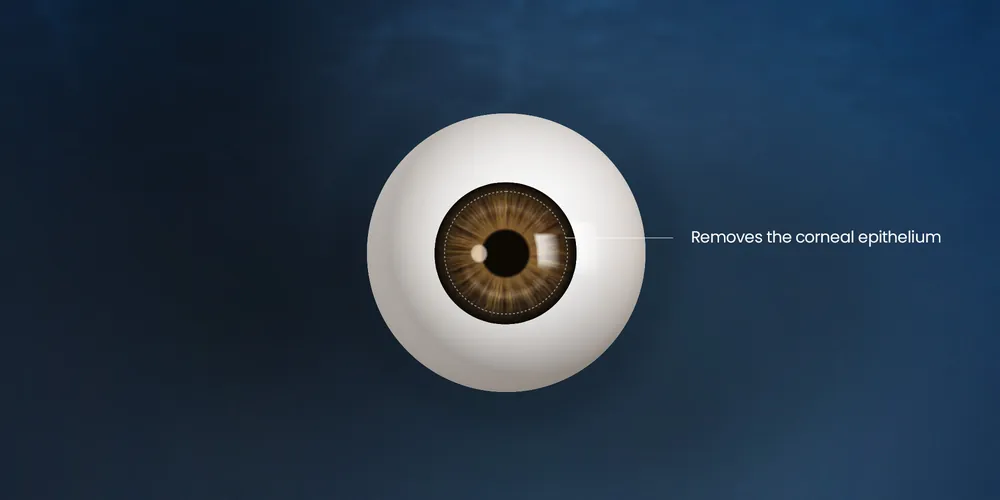
No. That window covers the early healing of the corneal surface, and clear, steady vision can take longer. LASEK treats the cornea just under its thin outer skin, the epithelium, and that layer has to heal over before your eyes feel comfortable again.
The American Academy of Ophthalmology's EyeWiki page on LASEK says a soft bandage contact lens typically comes out on day 3 or 4, once the surface has closed. It also lists slow visual rehabilitation as a disadvantage. In one early series it describes, vision stabilized at around 60 days, and a mild cortisone drop continued for up to a month in that technique.
That's why the belief costs people. Day 7 can feel like the end, and then the board at the back of a classroom still looks soft on Monday. For many people that's ordinary healing, so give yourself lighter work for the first weeks back if you can.
Count the clinic's listed 5–7 days, then add your exam and a margin before the flight. A long weekend can't hold that. Before you count, check your contact lenses too, because they have to come out ahead of both the exam and the surgery.
We ask for at least 5 days without soft lenses, at least 2 weeks without rigid or toric lenses, and at least 1 month without Ortho-K lenses. If you wear rigid or toric lenses, your plan starts two weeks before you board.
Say you teach English in Bangkok, wear soft lenses, sit around -5.00 and have nine days off. Nine days can hold an exam, the listed recovery and a small margin. With five days, I'd move the trip, since the recovery we list wouldn't fit even without the exam.
Now look at the days of the week. Land on a Tuesday night and your exam can't happen until Thursday, because we're closed on Wednesday. Have surgery on a Saturday and the next open day is Monday. Our weekday hours are 9:30 AM to 6:30 PM with a lunch break from 1:00 to 2:00 PM, and Saturdays run 8:30 AM to 5:00 PM.
If you're on a budget, you may want to fill the middle days with sightseeing. Light sensitivity, watering and blur are common while the surface heals, so keep the first few days free of bookings, with sunglasses ready for going outdoors. Ask before you book whether a bandage lens will be used in your case and when it comes out, and stay in Seoul past that date. The rest of your bookings can follow our checklist for a vision correction trip to Seoul.
Working out your own count? Tell us on WhatsApp which lenses you wear and when you can stop wearing them, and ask which exam day would work with your flights.
Send your dates or prescription on WhatsApp
The method sets the length of your stay more than anything else in this post. These are the figures from our own comparison:
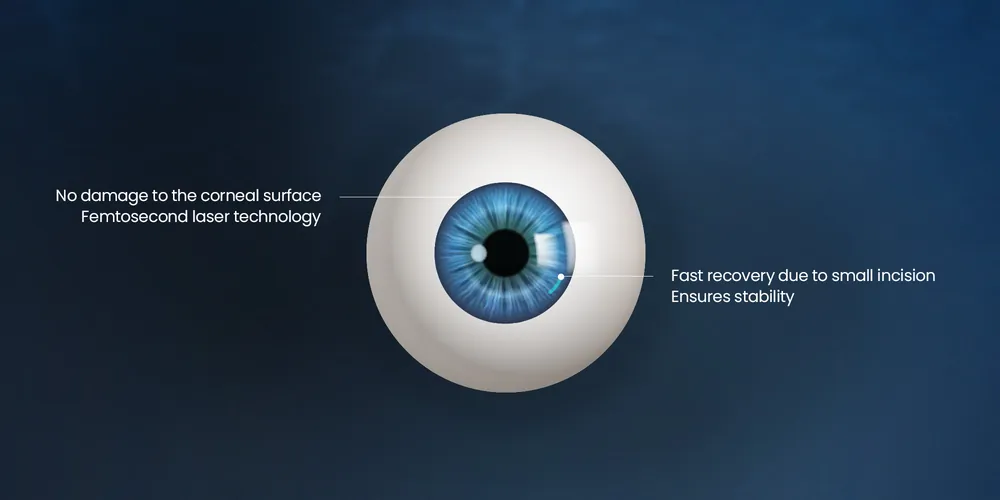
LASEK's listed advantage is that it's resistant to external impact, because no flap is made. The full side-by-side is in our comparison of SMILE, LASIK and LASEK in Korea.
| Procedure | Recovery listed | Trade-off listed |
|---|---|---|
| SMILE LASIK | 1 day | Price |
| Custom LASIK | 2–3 days | Weaker against external impact |
| Laser Fit LASEK | 5–7 days | Slow recovery, pain for a few days |
I wouldn't pick LASEK from a table, and I wouldn't rule it out because the days look long. The choice comes from your exam: corneal thickness, how much tissue can be safely removed, astigmatism and the overall health of the eye, along with how you live and work. If SMILE doesn't suit your eye, LASEK or an ICL implant may be what I recommend. ICL puts a lens inside the eye, so it carries its own risks, such as raised eye pressure or cataract.
Dr. Hyun Chul Cheon
Forum threads tend to repeat three claims, and each is partly true.
"The first few days are rough." Mostly fair. We list pain for a few days, and the AAO page counts postoperative pain among LASEK's disadvantages. The same page reports an early series in which 62.7% of patients had no postoperative pain, which helps explain why threads disagree. Plan your days as if you'll be in the group that feels it.
"You're back to normal in a week." Half true. Comfort often returns well before sharpness does, and someone writing on day 8 can't tell you about week 6.
"No flap means nothing can go wrong." Not true. Having no flap removes flap problems. A healing surface brings its own, and the AAO page lists higher risks of persistent epithelial defect and microbial keratitis.
People on a tight budget often price the operation and forget the calendar. These are the things that move your total:
The breakdown in our post on what moves the cost of LASIK in Korea follows the same logic for a flap procedure. We don't publish a price list, so ask on WhatsApp what LASEK would cost for your case, with a photo of your prescription.
Risks and side effects to know
In the first days, expect some pain, watering, light sensitivity and blurred vision. These usually ease as the surface heals, though the pace varies with your eyes and your prescription. Less often, healing is slow, the cornea develops haze, or a surface infection appears.
As general medicine, you should usually wait or look at other options if your prescription is still changing, your cornea is thin or irregular, you have an active eye infection, or you're pregnant or breastfeeding. Tell your doctor if you take heart medication or a blood thinner such as aspirin, because it may need stopping about a week before surgery. If your exam finds a clouding lens instead, the plan changes altogether, and our post on cataract surgery and lens choice covers that route.
Once you're home, worsening pain, a drop in vision, redness or discharge need an eye doctor the same day. Steroid drops can raise eye pressure in some people, so ask how long yours will run and find an ophthalmologist at home before you leave. The CDC also advises getting your records from the facility before you go, and having them translated if needed. Its advice to delay flying for 10–14 days applies to major surgery, especially chest surgery, so don't treat it as a LASEK rule. Ask for your own flight date instead.
One photo of your latest prescription on WhatsApp is enough to start, and you can ask before booking anything. Add the question you most need answered, such as who you'd see at home if your eyes felt wrong on day 10. When you come to Seoul, the doctor examines your eyes and recommends the procedure that fits them and the way you live.
Results vary by individual, and your exam decides which procedure is proposed.
Planning your trip
From the first message to the check-up afterwards: the steps, the contact lens rules and the airport route, in the order you will meet them.
Laser vision correction
Three laser options, three different trade-offs. A side-by-side look at method, recovery time and who each one tends to suit, using the clinic's own comparison.
Laser vision correction
The cost of laser vision correction in Korea is set mostly by which method your corneas allow, which add-on comes with it, and how your stay and follow-up are planned.