Lens surgery
Presbyopia lens surgery in Korea: monofocal, multifocal and ArtiPlus
Close-up vision fades because the lens stiffens, not because of laser surgery. Here is how monofocal and multifocal lenses differ, and what ArtiPlus is.

Laser vision correction
The cost of laser vision correction in Korea is set mostly by which method your corneas allow, which add-on comes with it, and how your stay and follow-up are planned.
Is the LASIK cost Korea clinics quote you really all-in, or will the number grow once you're sitting in the exam chair?
Read this before you book flights around a quote.
By the end you'll know which methods move the cost, what reviews of Korean laser eye surgery get right and wrong, and how recovery shapes the days you need here, so you can weigh any quote against your own eyes and your budget.
Hello, I'm Dr. Hyun Chul Cheon, Representative Director at Bright Eye Clinic Gangnam and an ophthalmology specialist.
We offer SMILE, SMILE Pro, Custom LASIK and LASEK under one roof, with three VisuMax lasers on site and an Amaris Red excimer laser for LASIK and LASEK. We have interpreters for international patients, and the clinic is KAHF accredited for 2025–2029, Korea's program for hospitals serving foreign patients.
I wrote this because people tend to line up laser eye surgery quotes as if they priced the same product, when two quotes can describe different methods, different add-ons and different follow-up.
The cost of laser vision correction in Korea is set mostly by which method your corneas allow, which add-on treatment comes with it, and how your stay and follow-up are planned. We don't publish a price list, so the rest of this page shows you what moves the figure.
If you'd like a number for your own eyes, send a photo of your current glasses prescription on WhatsApp and ask one thing: what would a quote for my case include? Asking with your real prescription keeps the answer about your eyes rather than an average eye.
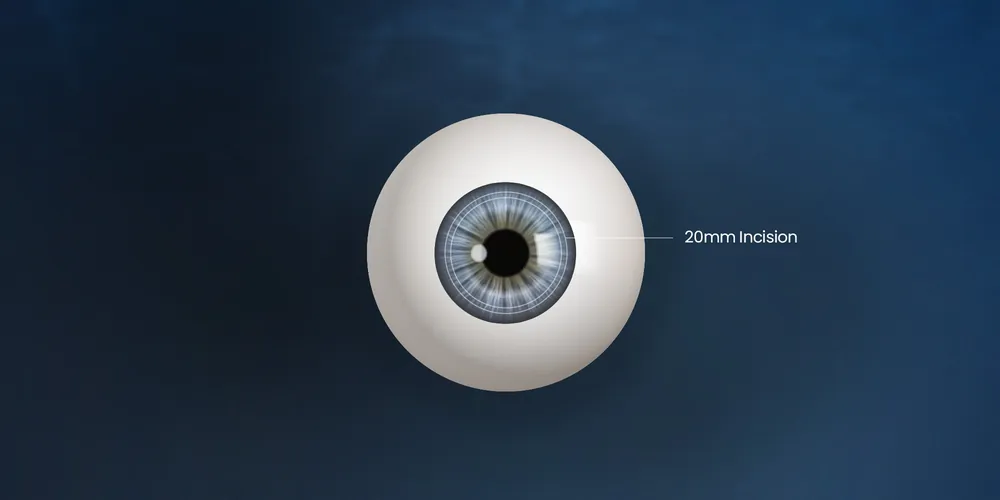
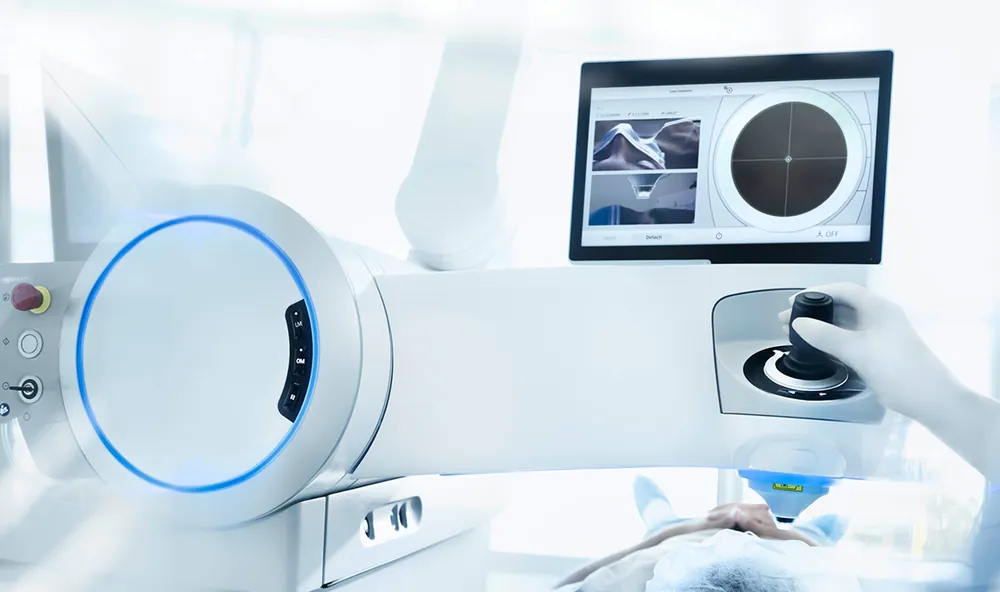
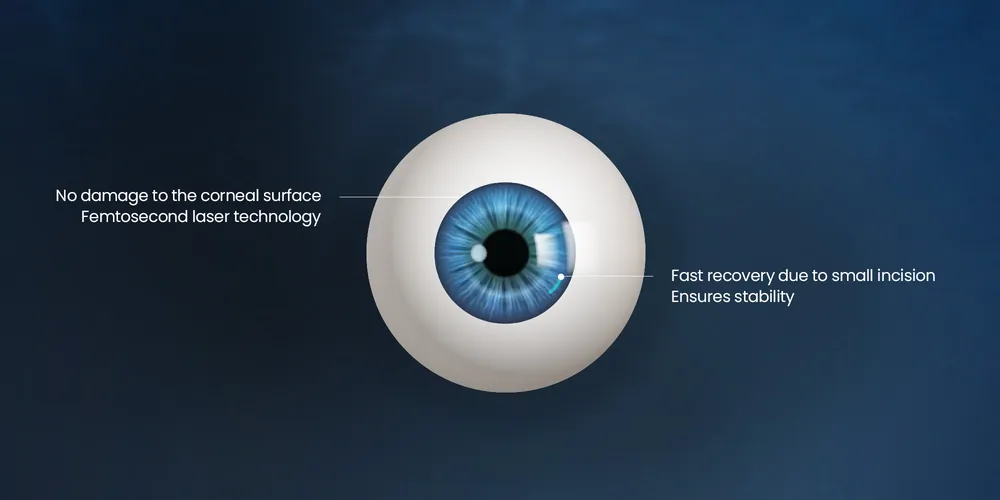
Because the word LASIK on a search page usually covers four different operations. In Custom LASIK, a thin flap is made in the cornea and the Amaris Red excimer laser reshapes the tissue beneath it. In LASEK, the laser works on the surface with no flap, and the thin surface layer of the cornea heals back over the treated area. SMILE goes another way: a femtosecond laser shapes a small disc of tissue, called a lenticule, inside the cornea, and it comes out through a small incision. SMILE Pro uses the same technique on the newer VisuMax 800, where laser time drops from about 23–30 seconds per eye to about 10.
Each of these is priced as its own procedure, and you don't get to pick freely among them. Which ones are open to you is measured, not preferred: corneal thickness, how much tissue can be removed while leaving the cornea strong enough, the health of the corneal endothelium, the anatomy of your eye, astigmatism and the overall condition of the eye. Your lifestyle and what you need from your vision come into it too, once those numbers are known.
That's why two people with the same glasses prescription can leave the same clinic with different quotes. A figure given before anyone has measured your cornea is an estimate for a method you might not end up having.
If your cornea suits none of these, an ICL implant, a lens placed inside the eye, may be recommended instead. That's a different operation with its own cost, so it changes the conversation entirely.
SMILE tiers are part of the cost too
We offer SMILE in several tiers. Triple SMILE and Core SMILE strengthen the cornea to increase stability. Quattro SMILE and Prime SMILE replenish moisture to reduce discomfort. Signature SMILE adds a platelet-rich treatment with 8 times more concentrated platelets. Bright SMILE Pro is performed on the VisuMax 800 by a doctor with 10+ years of SMILE experience.
The doctor recommends a tier after your exam.
| Method | How it works | Tends to fit |
|---|---|---|
| SMILE LASIK (ZEISS VisuMax) | Lenticule removed through a small incision, no flap | Nearsightedness with or without astigmatism, cornea thick enough for the correction |
| SMILE Pro (ZEISS VisuMax 800) | Same technique, about 10 seconds of laser per eye | The same eyes as SMILE |
| Custom LASIK (Amaris Red) | Flap, then excimer reshaping underneath | Corneas with room for both a flap and the correction |
| LASEK | Surface laser, no flap; the surface layer usually heals over a few days | Thinner corneas, or people who would rather avoid a flap |
Five things set the figure for your case.
The method comes first. SMILE, SMILE Pro, Custom LASIK and LASEK are separate procedures with separate costs, and your corneal measurements narrow that list before anyone talks money.
Then the tier or add-on. Corneal strengthening (CXL) applies riboflavin to the cornea and then controlled UV light, which strengthens the collagen fibers inside it. It's commonly recommended when the cornea is thin or a lot of tissue has to be removed, so a strong prescription on a thinner cornea makes it more likely to appear on your quote. Moisture and platelet-rich treatments are separate lines again.
Your prescription and astigmatism rarely show up as a line of their own. They decide which method and which add-on are on the table, and that's where they move the figure.
Days in Seoul matter even though they never appear on a clinic bill. After SMILE, the follow-up check is typically within 1–2 weeks, and whether you stay for it changes your hotel nights and your leave.
Last, what the quote includes.
Say you're around minus 6 with moderate astigmatism, you have eight days of leave, and your measurements show a cornea on the thinner side for that correction. The trade I'd weigh is tissue. SMILE might still be possible with corneal strengthening added, or LASEK might leave more of the cornea's strength in place, at the cost of a slower and more uncomfortable first few days. Either way the quote changes, and so do your eight days, because LASEK's surface needs time to heal before vision settles.
To get the figure for your own case, ask on WhatsApp what it would cost for your case and which of these five items that figure covers.
When a cornea is thin for the correction it needs, I'd rather change the method than remove more tissue to keep a preferred one. If SMILE isn't suitable, LASEK or an ICL may be what I recommend, and the quote moves with that decision. I'd rather you see that change coming than be surprised by it in Seoul.
Dr. Hyun Chul Cheon
Forum threads and review sites repeat a handful of claims. Some hold up medically; a few need a correction.
'I could see the next morning.' For SMILE this is common: vision may be slightly blurry on the day, and most people see clearly from the next day. With LASEK it's usually slower, because the surface layer has to heal first, and the first days tend to be more uncomfortable.
'The price went up after the exam.' This happens, and it usually reflects the method changing once the cornea has been measured. On your side, the fix is to ask what a quote includes and what would change it, before you fly.
'Clinics push the newest laser.' SMILE and SMILE Pro use the same surgical technique. The VisuMax 800 behind SMILE Pro has a faster femtosecond laser and improved eye tracking, centration and astigmatism correction. Whether that difference matters for your eye is a question your measurements answer.
'The dryness was gone in a week.' Sometimes. Glare, night halos and dry eye after SMILE usually settle within a few weeks and are managed with artificial tears or prescribed drops. For some people dryness lasts longer, and existing dry eye is one of the conditions the US FDA lists as a reason LASIK may not suit you.
Your trip starts before you board. Soft contact lenses have to come out at least 5 days before the exam, rigid or toric lenses at least 2 weeks before, and ortho-K lenses at least a month before, so plan those weeks in glasses around your last days at work.
We're open Monday, Tuesday, Thursday and Friday from 9:30 AM to 6:30 PM and Saturday from 8:30 AM to 5:00 PM, and closed on Wednesday and Sunday. If you take aspirin, heart medication or blood thinners, tell the doctor at consultation; some people are asked to stop about a week before surgery.
On surgery day, skip makeup, perfume and hairspray, wear something you can lie down in comfortably, and don't plan to drive. Bring a companion if you can. After SMILE, vision is often a little blurry that day and clear the next; glare and halos typically ease within 1–2 weeks, and final results come over 1–3 months. Ask at booking how the follow-up check fits your return flight.
General LASIK guidance from the US FDA includes not rubbing your eyes and holding off on swimming, hot tubs and eye makeup for a while after surgery, which is worth knowing if your trip includes a spa day.
Once you know your window, send your travel dates on WhatsApp along with the type of contact lenses you wear, and ask how the exam, surgery and follow-up check fit between them. Lens type alone sets how early you need to switch to glasses before you fly.
The common effects are temporary. After SMILE, glare, nighttime halos and dry eye may occur, and in most cases they resolve within a few weeks with artificial tears or prescribed medication. Less often, visual recovery is slower or a small residual prescription remains. Myopic regression, a partial return of nearsightedness, can also happen. An enhancement may be considered depending on how much corneal tissue remains, using procedures such as LASEK or an ICL. Serious complications such as corneal inflammation or opacity are extremely rare and are typically treatable with medication when caught early.
Some eyes should wait or skip laser altogether. The FDA's list includes a prescription that has changed within the past year, pregnancy or nursing, autoimmune disease or medicines that affect healing, significant dry eye, thin corneas, and contact sports or a job that rules out refractive surgery. A cornea that steepens unevenly can be an early sign of keratoconus, which laser reshaping can make worse; that's one reason the measurements matter more than the prescription. Candidacy, and the method, are confirmed only after a thorough preoperative evaluation.
If you notice increasing pain, worsening redness or a sudden drop in vision after you fly home, see an ophthalmologist where you live promptly and bring your surgery details. The CDC's medical tourism advice is to keep copies of your medical records from the trip. Whatever you choose, an eye exam once a year is worth keeping up, because the retina and optic nerve matter to your vision as much as the cornea does.
If you're comparing numbers right now, one photo is enough to start, and an old exam report works as well as anything. Send it on WhatsApp and ask which of the five factors above apply to your eyes; you can ask before booking anything. When you come to Seoul, we examine your eyes in full and recommend the method that fits them and the way you live.
Results vary by individual, and your exam decides which procedure is proposed.
Lens surgery
Close-up vision fades because the lens stiffens, not because of laser surgery. Here is how monofocal and multifocal lenses differ, and what ArtiPlus is.
Laser vision correction
Three laser options, three different trade-offs. A side-by-side look at method, recovery time and who each one tends to suit, using the clinic's own comparison.
Planning your trip
From the first message to the check-up afterwards: the steps, the contact lens rules and the airport route, in the order you will meet them.