Laser vision correction
SMILE vs LASIK vs LASEK in Korea: how the three compare
Three laser options, three different trade-offs. A side-by-side look at method, recovery time and who each one tends to suit, using the clinic's own comparison.

Planning your trip
What you pay for SMILE in Korea comes down to the method your exam supports, any add-on such as corneal strengthening, and how many days you stay for the follow-up check.
SMILE LASIK cost Korea: will the number you're quoted cover your whole trip, or only the surgery itself?
Read this before you book flights around it.
By the end you'll know what decides the cost for your eyes, what reviews get right and wrong, how SMILE and SMILE Pro differ as methods, and how recovery fits into a short trip. That's enough to tell which option suits your eyes and your budget.
Hello, I'm Dr. Hyun Chul Cheon, Representative Director at Bright Eye Clinic Gangnam in Seoul. I'm an ophthalmology specialist, certified in ICL / SMILE.
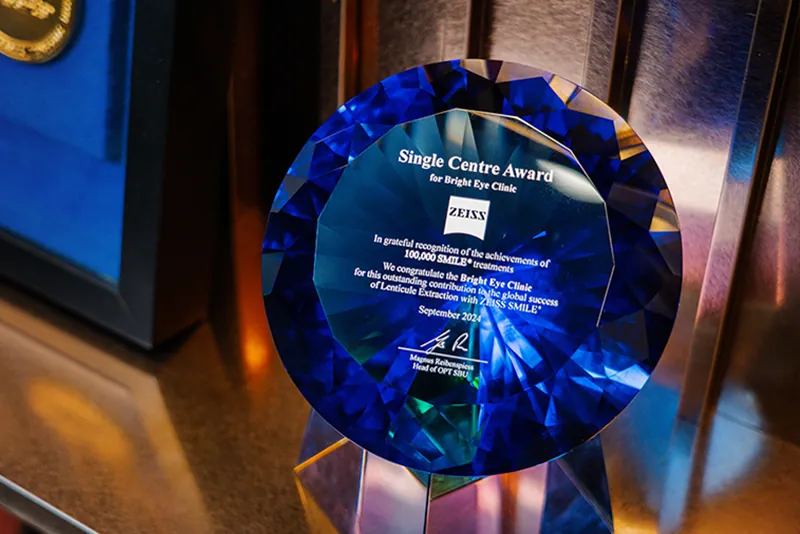
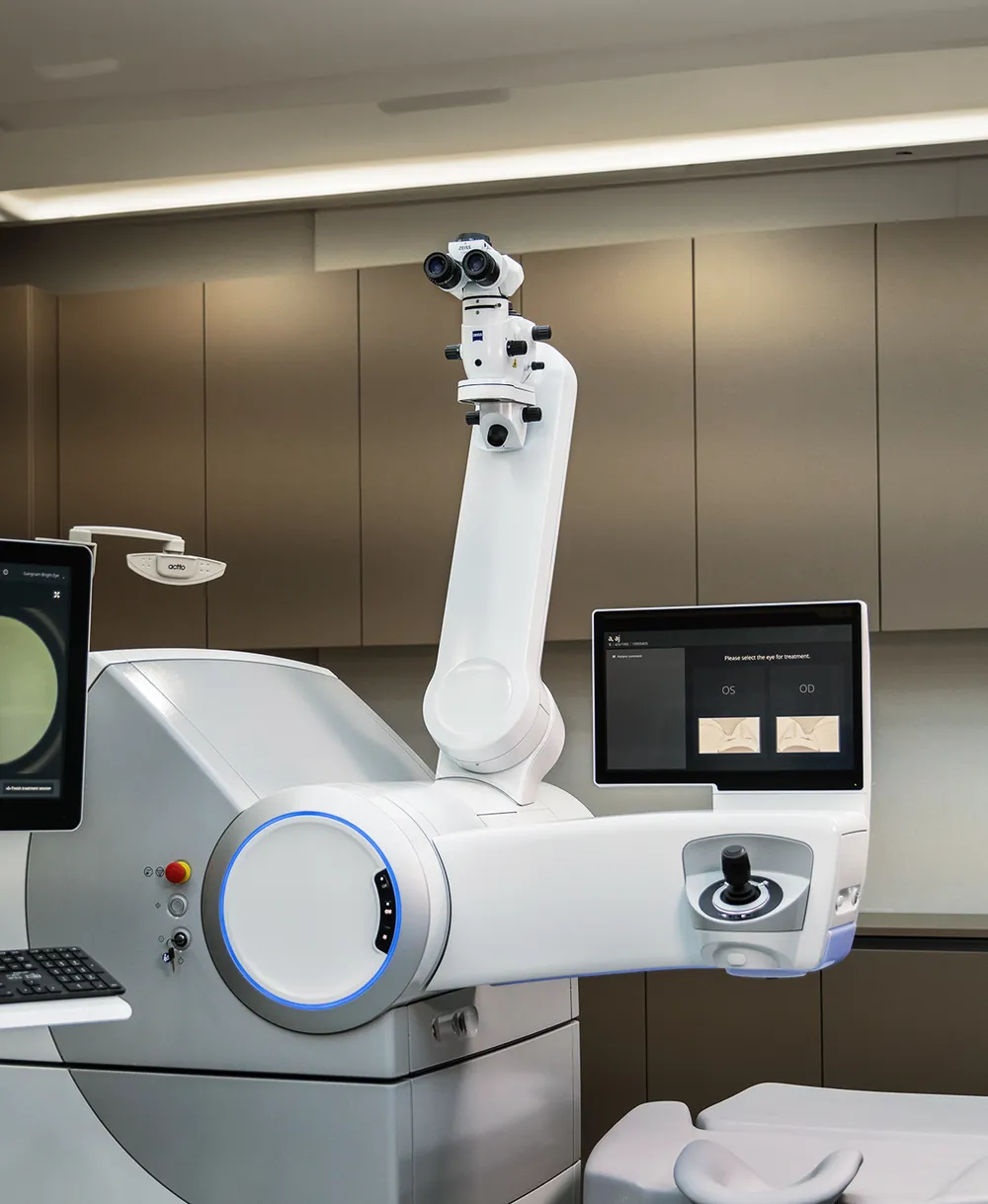
We have 3 VisuMax lasers on site, including the ZEISS VisuMax 800 used for SMILE Pro, and interpreters for international patients. The clinic is KAHF accredited for 2025–2029, Korea's program for hospitals serving foreign patients.
I'm writing this because SMILE quotes get compared as if the laser were the whole bill, when your exam result and your travel dates can change the plan more than anything on a price sheet.
There isn't one figure that fits everyone. What you pay for SMILE in Korea comes down to which method your exam supports, whether you need an add-on such as corneal strengthening, and how long you stay for the follow-up check. We don't publish a price list, so the figure for your eyes comes from asking.
If you want a starting point, send a photo of your current glasses or contact-lens prescription on WhatsApp and ask what SMILE would cost for eyes like yours.
Because neither one has measured your cornea yet. A quote given before an exam is an estimate for an average eye, and yours may need a different method or an extra step.
(If you landed here looking for a "smile lift", that's a lip and mouth procedure done by plastic surgeons. This page is about SMILE, the laser procedure for nearsightedness and astigmatism.)
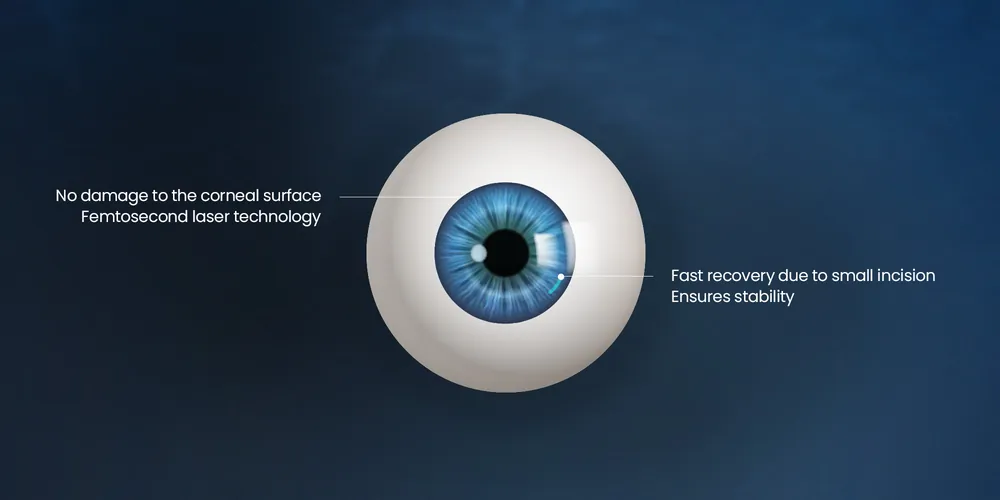
SMILE shapes a thin disc of tissue, called a lenticule, inside the cornea with a femtosecond laser and removes it through a small incision, without cutting a flap. Reinstein and colleagues describe the technique in Eye and Vision. The stronger your prescription, the thicker that disc. So the real question for your budget is whether your cornea has room for the correction you need.
Which procedure fits is decided after a comprehensive exam: corneal thickness, how much tissue can be safely removed, the health of the endothelial cells at the back of the cornea, the anatomy of your eye, your astigmatism and the overall condition of the eye. For me, the number that matters most is how much cornea would be left afterward. Your lifestyle and what you need to see well also count, and they belong in the conversation before any figure does.
Five things move the number for you, and only one of them is the laser.
Anaesthesia isn't a big variable here, because laser vision correction is done with numbing eye drops, not general anaesthesia. The part people underestimate is their own spend outside the clinic: nights in Seoul, meals, and transport on surgery day, since driving afterward isn't recommended.
To get the figure for your case, ask on WhatsApp which of these five apply to you. If you're also weighing LASIK, I've written separately about what moves the cost of LASIK in Korea.
| Factor | Why it changes the cost | What to ask |
|---|---|---|
| Method | SMILE (VisuMax) and SMILE Pro (VisuMax 800) use the same technique on different lasers; if SMILE doesn't suit you, LASEK or an ICL implant is a different procedure | Which methods my prescription could fit |
| What the exam finds | Corneal strengthening (CXL) is commonly recommended for thin corneas or large corrections | Whether CXL might apply to me |
| The pre-op exam | The procedure is chosen only after a comprehensive exam | Whether the exam is part of the figure |
| Days in Seoul | After SMILE, a check-up is typically done within 1–2 weeks | How the follow-up visit fits my dates |
| Aftercare | Drops, dry-eye care and any enhancement later | What's included after surgery |
They're the same operation on two generations of laser. Both create and remove a lenticule; SMILE Pro runs on the ZEISS VisuMax 800.
What changes is the machine. The VisuMax 800 has a faster femtosecond laser, so the lenticule is made in about 10 seconds per eye, against roughly 23–30 seconds of laser time with SMILE. It adds eye-tracking and centration functions (OcuLign and CentraLign) that guide where the laser lands, and improved astigmatism correction.
My reasoning with you would go like this. If your eyes suit both, the difference you're choosing is laser speed, centration and how astigmatism is handled. Someone with meaningful astigmatism has more reason to care about centration than someone with a low, simple prescription. Whether SMILE Pro is right for you is decided after the exam, so don't lock in one method before you've been measured. For the wider picture, here's how SMILE, LASIK and LASEK compare in Korea.
Some eyes shouldn't have it, and finding that out at the exam is better than finding it out after you've paid for flights.
I'd hold off or look at another option when the cornea is thin for the amount of correction, when the corneal map shows steepening in a pattern that can point to early keratoconus, or when your prescription is still changing. The FDA's page on when LASIK is not for you also lists pregnancy or nursing and some autoimmune conditions. It was written for LASIK, but most of it applies to corneal laser surgery in general.
If SMILE is not suitable, LASEK or an ICL implant may be recommended. LASEK reshapes the surface of the cornea without a flap; the first few days are usually more uncomfortable and vision takes longer to settle, which matters on a short trip. An ICL is a lens placed inside the eye, and the FDA notes possible risks such as cataract, raised eye pressure and loss of corneal endothelial cells (FDA on phakic lens risks), so it needs its own exam and its own conversation.
Say you're 27, teaching English in Japan, -6.75 in both eyes with some astigmatism, and you have nine days of spring break. If your corneas are thick enough for that correction, SMILE can fit the window, with the follow-up check inside it. If they measure thin, I'd talk you through LASEK or an ICL instead, and both the cost and the days change: LASEK's slower start makes nine days feel tight, and an ICL is a different procedure altogether. That's why the exam comes before the budget.
If SMILE isn't right for your cornea, I'd rather say so and walk you through LASEK or an ICL than fit your eyes to the procedure you budgeted for. A plan that matches your budget but leaves too little cornea is the wrong trade. The cornea you have after surgery is the one you'll live with for decades.
Dr. Hyun Chul Cheon
Most of what people post about the first day is accurate. What's thinner is the weeks after, and what the quote included.
"I could see the next day." Usually true. Vision may be slightly blurry on surgery day, and most people see clearly from the next day, but vision keeps stabilizing and the final result takes 1–3 months.
"SMILE means no dry eye." Not true. Dry eye, glare and halos at night can all happen after SMILE. They usually settle within a few weeks and are managed with artificial tears or prescribed drops.
"SMILE Pro is a whole new surgery." It's the same lenticule technique on a newer laser, as above.
"Everything was included." Maybe, for that person's quote. Whether the exam, drops and follow-up visit sit inside a figure changes from quote to quote, so ask what yours covers instead of assuming from someone else's post.
Plan your stay around the follow-up check, which after SMILE is typically within 1–2 weeks. The surgery itself is the short part.
Start before you fly. Contact lenses have to come out before the exam: soft lenses at least 5 days, rigid or toric lenses at least 2 weeks, and ortho-K lenses at least 1 month. If you wear contacts, you'll be traveling in glasses.
Then check the calendar. We're open Monday, Tuesday, Thursday and Friday from 9:30 AM to 6:30 PM and Saturday from 8:30 AM to 5:00 PM, closed Wednesdays and Sundays, with lunch from 1:00 to 2:00 PM. We're at 531 Gangnam-daero, Seocho-gu. On surgery day skip makeup, perfume and hairspray, wear clothes you can lie down in, and don't plan to drive; bringing a companion is strongly encouraged.
Sightseeing is usually fine once your vision clears, within limits. Most surgeons ask you not to rub your eyes and to keep water and dust out of them for the first while, so pools and saunas are for a later trip. You may notice glare at night for the first week or two. My trip checklist for vision correction in Seoul covers the rest of the planning.
When you have a rough window, send your travel dates on WhatsApp and ask whether a SMILE exam, surgery and follow-up visit can fit inside them.
Risks and side effects to know
The common reactions are temporary: glare, halos at night and dry eye, which in most cases settle within a few weeks with artificial tears or prescribed drops. Less often, recovery is slower or a small residual prescription remains; an enhancement can then be considered, according to how much corneal tissue is left. Serious problems such as corneal inflammation or haze are extremely rare and usually treatable with medication when caught early.
As general medicine, it's wise to wait if your prescription is still shifting, if you're pregnant or breastfeeding, if your cornea is thin or irregular, or if you have an active eye infection or untreated dry eye. Your exam is where these get checked, and recovery speed and results vary from eye to eye.
If something changes once you're home, such as vision dropping, pain, or a red eye that gets worse, see a local ophthalmologist promptly and contact us with what you're noticing. The US CDC's medical tourism advice is to plan follow-up care before you leave and keep copies of your records, so take your surgery notes home. Whatever you have done, keep an annual comprehensive eye exam, because the retina and optic nerve matter to your sight as much as the cornea.
Laser correction treats your cornea, not the lens behind it. Presbyopia arrives with age whether or not you've had surgery, and decades from now cataract surgery is a separate decision with its own lens choices and costs. Knowing that now keeps SMILE in proportion in your budget.
When you're ready, send two things on WhatsApp: a photo of your latest prescription and the dates you could be in Seoul, with the one question that matters for your budget, what SMILE would cost for your eyes including anything the exam might add. You can ask before booking anything. When you come, the doctor examines your eyes and recommends the method that fits your cornea, your astigmatism and your plans.
Results vary by individual, and your exam decides which procedure is proposed.
Laser vision correction
Three laser options, three different trade-offs. A side-by-side look at method, recovery time and who each one tends to suit, using the clinic's own comparison.
Planning your trip
From the first message to the check-up afterwards: the steps, the contact lens rules and the airport route, in the order you will meet them.
Laser vision correction
The cost of laser vision correction in Korea is set mostly by which method your corneas allow, which add-on comes with it, and how your stay and follow-up are planned.