EVO ICL Surgery Cost in Korea: What Counts After 40? Reviews, Methods and Recovery
EVO ICL surgery cost in Korea is set mainly by the lens type, the sizing measurements, whether both eyes are treated and your follow-up days; after about 45, compare it with presbyopia lens surgery first.
At 45 with strong glasses, is the EVO ICL surgery cost in Korea worth paying when reading glasses, and one day cataract surgery, are already on the horizon?
Give this a read before you plan your leave around it.
You'll know what ICL reviews get right and what they skip, how the lens methods compare for someone in their forties, and what recovery and follow-up mean for your trip, so you can judge whether an implant suits the next stretch of your eyesight and your budget.
Hello, I'm Dr. Hyun Chul Cheon. I'm Representative Director at Bright Eye Clinic Gangnam and certified in ICL.
We offer ICL alongside SMILE, LASEK and presbyopia lens surgery, so implant, laser and lens-replacement options all sit in front of us when we look at your results. We have interpreters for international patients, and our KAHF accreditation runs from 2025 to 2029.
I'm writing this because people in their forties often weigh ICL against laser as if they were thirty, and the age of the natural lens sitting behind the implant changes that comparison.
EVO ICL surgery cost in Korea is set mainly by the lens type your eye needs, the measurements used to size it, whether both eyes are treated, and the days you spend here for follow-up. After about 45, it's worth putting presbyopia lens surgery into the comparison before you price anything. We don't put a price list online.
If that sounds like you, send a photo of your glasses prescription on WhatsApp, tell us your age, and ask: should presbyopia lens surgery be part of my comparison? Prescription and age together are what that question turns on.
An ICL is a thin lens placed inside the eye, in front of your own lens, which stays where it is. It corrects your prescription without removing corneal tissue, which is why it's the option for eyes that laser doesn't suit.
Your own lens keeps aging behind it. The American Academy of Ophthalmology describes presbyopia, the gradual loss of close focus, as a normal part of aging that usually becomes noticeable in your forties. An ICL corrects distance, but it doesn't stop near vision from fading, and if a cataract develops later, the ICL is generally removed as part of the cataract operation.
At 30, the natural lens usually has many years left before either change. In your mid-forties, the near-vision change may already have begun, and that shortens the years an ICL serves you before the next lens question arrives.
Lens methods for strong prescriptions after 40
A word on the name. EVO is STAAR Surgical's current ICL design, which the US FDA approved for myopia in 2022, as reported by Optometry Times. We list the procedure as an ICL implant; ask which lens model would be used for your eye.
If SMILE isn't suitable, LASEK or an ICL may be recommended, and past 45, presbyopia lens surgery joins that list. A personal plan comes from comparing lens options against your exam results and your visual needs.
Option
What changes in the eye
Fits when
ICL implant
A lens is added in front of your own lens, which stays
The cornea is thin or irregular for laser, or the prescription is beyond laser range, and your natural lens is still clear
Presbyopia lens surgery
Your natural lens is replaced, with multifocal and other lens options
Near vision is already changing, or the natural lens may be starting to cloud
SMILE or LASEK
The cornea is reshaped by laser
The cornea is thick enough for the correction
What sets the EVO ICL surgery cost in Korea for your eyes?
The lens itself is the first factor. Toric versions exist for astigmatism, and whether your eye needs one changes which lens is ordered. Ask which version applies to your prescription.
Sizing is the second. An ICL sits in a small space between the iris and your natural lens, so that space and the health of the corneal endothelium, the cell layer lining the back of the cornea, are measured before any lens is chosen. Endothelial cell health is one of the factors the exam weighs for every vision correction option.
Third, one eye or both. Most people with a strong prescription need both eyes corrected, and how the two are scheduled shapes your stay.
Fourth, your days in Seoul.
Fifth, the comparison itself. If presbyopia lens surgery turns out to fit your eyes better, you're pricing a different operation, so it makes sense to settle that question before comparing ICL quotes.
To get the figure for your own case, ask on WhatsApp what it would cost for your case, and mention whether you have astigmatism.
Say you're 47, around minus 11 with some astigmatism, your corneas measure on the thin side, and you've started holding your phone at arm's length to read it. For that cornea, laser is probably off the table. An ICL would correct your distance and keep your own lens, and you'd reach for readers as presbyopia progresses. Lens replacement could address distance and near together, but it replaces a lens that may still be clear. I'd lay those two side by side with your measurements before talking about cost.
For someone in their late forties, I want the decision to account for the next ten or fifteen years, not just this trip. An ICL keeps your own lens and can be removed later; lens replacement takes the natural lens out once. Neither is my default. The one I'd propose comes from your measurements, how much close work you do and how much glare at night you'd tolerate.
Dr. Hyun Chul Cheon
What ICL reviews get right, and what they skip
ICL threads online tend to make four claims.
'It's reversible.' Mostly true. An ICL can be removed or exchanged, but that is another operation inside the eye, so it's a safety net and not a casual undo button.
Risks and side effects to know
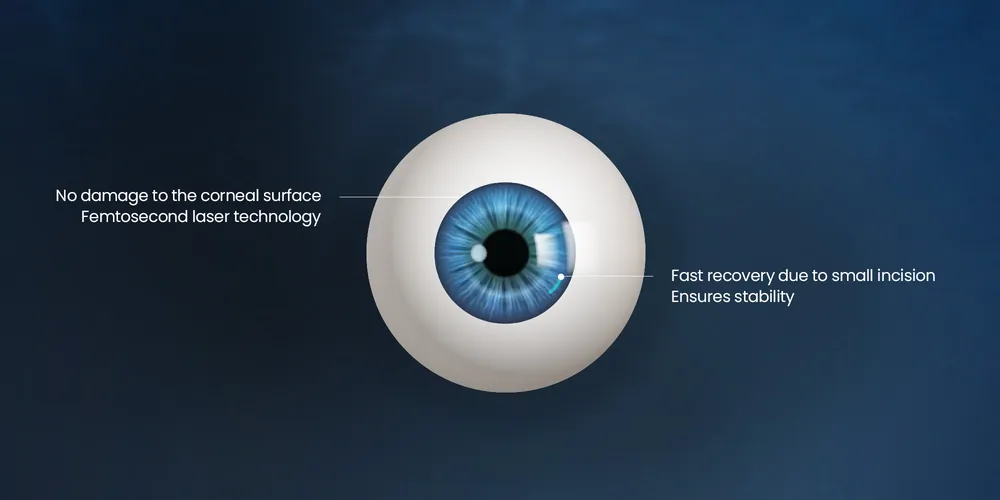
'No dry eye like after laser.' ICL surgery leaves most of the corneal surface untouched, so dryness is commonly less of an issue than after laser, though eye drops are still part of the early weeks.
'I see halos at night.' This can happen, especially in the first weeks, and some people notice it longer. If you drive a lot after dark, say so early.
'I'll never need glasses again.' Not past 40. Presbyopia develops whether or not you've had vision correction surgery, so plan for reading glasses at some point.
How long should recovery keep you in Seoul?
Contact lens wearers need a break before the exam: five days for soft lenses, two weeks for rigid or toric ones, and a month for ortho-K. If you take a heart medication or a blood thinner such as aspirin, mention it at consultation, since stopping about a week before surgery may be advised.
You won't be able to drive after surgery, so arrange transport, and a companion is strongly encouraged. Leave makeup, perfume and sprays at the hotel that day.
Ask at booking which visits your plan includes and when you can fly. Keep Wednesday and Sunday free of clinic plans, since we're closed both days; on the days we're open, weekday hours run 9:30 AM to 6:30 PM.
Send your leave dates on WhatsApp, plus how many years you've worn contacts and what kind, and ask which visits must happen before you fly home. With a fixed number of days off, that answer decides the shape of the trip.
In the early weeks, glare, halos and light sensitivity are the usual complaints, and they tend to ease. The US FDA's list of phakic lens risks includes raised eye pressure, cataract formation, gradual loss of corneal endothelial cells, retinal detachment, infection and inflammation, and the possibility of another operation to reposition, replace or remove the lens. Most of these are uncommon, and several are the reason sizing and endothelial measurements matter so much beforehand.
Some people should wait or look at another option: a prescription that is still changing, a shallow space in front of the natural lens, a low endothelial cell count, pregnancy or breastfeeding, or active eye inflammation. A lens that is already starting to cloud usually points the conversation toward lens replacement. Candidacy, and the method, are confirmed only after a thorough preoperative evaluation.
After you fly home, eye pain with headache, nausea, halos and blurred vision can mean a pressure spike and needs an ophthalmologist the same day. New flashes, floaters or a curtain across your vision need urgent care too. Keep your surgery record and lens details with you; the CDC advises keeping copies of your medical records from treatment abroad. A yearly eye exam is worth keeping regardless, because the retina and optic nerve matter as much as the lens.
If you're torn between an implant and lens replacement, send one photo of your latest eye exam or glasses prescription on WhatsApp and ask what would decide between the two for you. You can ask before committing to any dates. When you come to Seoul, we examine your eyes in full and recommend the option that fits them and the years of reading and driving ahead of you.
Results vary by individual, and your exam decides which procedure is proposed.
EVO is the name of STAAR Surgical's current ICL design, approved by the US FDA for myopia in 2022. We list the procedure as an ICL implant, so ask which lens model would be used for your eye.
Can I have an ICL after previous laser surgery?
If vision declines after laser surgery and not enough corneal tissue remains for another laser treatment, ICL surgery may be considered as an enhancement.
Will I feel the lens inside my eye?
Generally no. The lens sits inside the eye, behind the iris, where you don't feel it the way you feel a contact lens.
What happens if I develop a cataract with an ICL in place?
The ICL is generally removed during cataract surgery, and an artificial lens replaces your clouded natural lens. Tell any future eye surgeon you have an ICL and share the lens details.
Does astigmatism rule out an ICL?
Not usually. Toric ICL versions are designed to correct astigmatism along with nearsightedness. Whether one suits your eye comes down to your measurements.