What Does Korea Cataract Recovery Expect of You? Cost, Reviews, Methods and Your Days in Seoul
Most people feel better within 1 or 2 days, but full healing takes about 4 to 8 weeks. Very nearsighted eyes add retinal checks and a gap between eyes, and both change how you plan your days in Seoul.
What does Korea cataract recovery expect of you when your eyes are very nearsighted, a doctor at home has called them difficult, and the flight back is long?
Read this before you book the return ticket.
You'll know what decides the cost, what reviews get right and wrong, which methods and lenses change the recovery, and how many days each stage asks for, so you can choose a plan that suits your eyes and your budget.
Hello, I'm Dr. Hyun Chul Cheon, Representative Director at Bright Eye Clinic Gangnam.
I'm an ophthalmology specialist, and my surgical record includes 7,000 cataract cases. Our clinic has interpreters for international patients and a Carl Zeiss Lumera 700 surgical microscope, and it's KAHF accredited for 2025–2029, Korea's program for hospitals serving foreign patients.
I wrote this because people often build the trip around surgery day, when most of what recovery asks of you comes afterward.
Part of your healing will almost certainly happen at home, so your plan has to cover it.
If your prescription is the worry, send a photo of your latest eye exam report on WhatsApp and ask one thing: how many days should I plan for eyes like mine?
Three things separate your recovery from the one your neighbor describes. A long, nearsighted eye has a higher risk of retinal detachment, and that risk generally doesn't vanish once the operation is over. Lens power is also harder to calculate in a long eye, and harder again if you've had laser vision correction, so old records are worth digging out.
The third surprises people most. Fix one eye first and that eye may need little distance correction, while the other is still around minus 9. Glasses can't comfortably bridge a gap that wide, so many people wear a contact lens in the unoperated eye until the second surgery.
This is also why advice from a friend's lens implant doesn't transfer. An ICL, covered in our EVO ICL guide for people over 40, keeps your natural lens. Cataract surgery removes it.
Eye health is more than the cornea. The retina and optic nerve affect your vision too, and with a long eye they would be on my mind before any lens brochure. If you sat in front of me, I'd ask who will look at your eye at home in week three. Your answer shapes the trip as much as your prescription does.
Dr. Hyun Chul Cheon
What Korea cataract recovery expects of you, stage by stage
The later rows are general medical guidance, and your surgeon may adjust them.
On surgery day, skip makeup, perfume and hairspray, and wear clothes you can lie down in comfortably. Skip the hoodie and boots as well.
Stage
What usually happens
What it asks of your trip
Before the exam
Lenses out: rigid or toric at least 2 weeks, soft at least 5 days, ortho-K at least 1 month
Starts at home, so pack your glasses
Exam day
Measurements and often dilating drops, which can blur near vision for hours
Keep the rest of the day empty
Surgery day
Natural lens removed and an artificial lens placed, usually as an outpatient
No driving; a companion is strongly encouraged
Days 1–2
The eye should start to feel better; drops begin
Stay close for any early check
First few weeks
Drops, possibly a shield for sleep, no heavy lifting or bending
Pack lightly and get help with bags
Weeks 4–8
Full healing for most people
Usually at home, with your own eye doctor
How many days should you plan in Seoul?
Count checkpoints instead of nights: an exam, the surgery, an early check, and spare time in case your surgeon wants a second look. Many surgeons check the eye within a day or two and again around a week later, so ask at booking which of those you need to attend in person.
Say you're 58, around -9.00 D, wearing toric soft lenses, with cataracts in both eyes. You'd move to glasses at least 2 weeks before your exam. I'd then treat the second eye as your main planning question. The National Eye Institute says the two eyes are usually done about a month apart, which means either a long stay or two trips. Some surgeons shorten that gap, so raise it early, along with how you'd manage the imbalance between your eyes in the meantime.
Our calendar matters here too. We're closed on Wednesdays and Sundays, and open Saturdays from 8:30 AM to 5:00 PM. Our Seoul trip checklist covers the rest of the packing and planning.
Send your possible travel dates and the type of lens you wear on WhatsApp, then ask which days you'd need to be in Seoul for one eye and for both.
In the first days, a sore or itchy eye, some blur and light sensitivity are common and usually settle. Later, your vision can turn cloudy weeks, months or even years after surgery. That's posterior capsule opacity, and it's commonly treated with a laser procedure.
Risks and side effects to know
Rarer but more serious problems include infection, swelling, bleeding, unusual eye pressure changes, vision loss and retinal detachment. The clinic doesn't publish rates for these, and results and healing differ from person to person.
For some people, going abroad may be the wrong call, or the timing may need to change:
The National Eye Institute says to call your doctor right away for vision loss, pain that medicine doesn't relieve, or very red eyes. It also lists flashes of light or many new floaters as symptoms to report. With a long eye, treat flashes and floaters as same-day problems and contact a local eye doctor.
The CDC's medical tourism advice is to make sure you can get follow-up care at home and to carry copies of your medical records. Find that eye doctor before you leave. The CDC also warns that flying after surgery can raise the risk of blood clots, and its 10 to 14 day advice concerns major surgery. Cataract surgery is much smaller, but if you have a clot history or a long-haul flight ahead, ask your surgeon when you can fly.
an active eye infection or inflammation
retinal disease that needs treatment first
a general health condition that makes long flights risky
no eye doctor available once you're home
Which methods and lenses change the recovery?
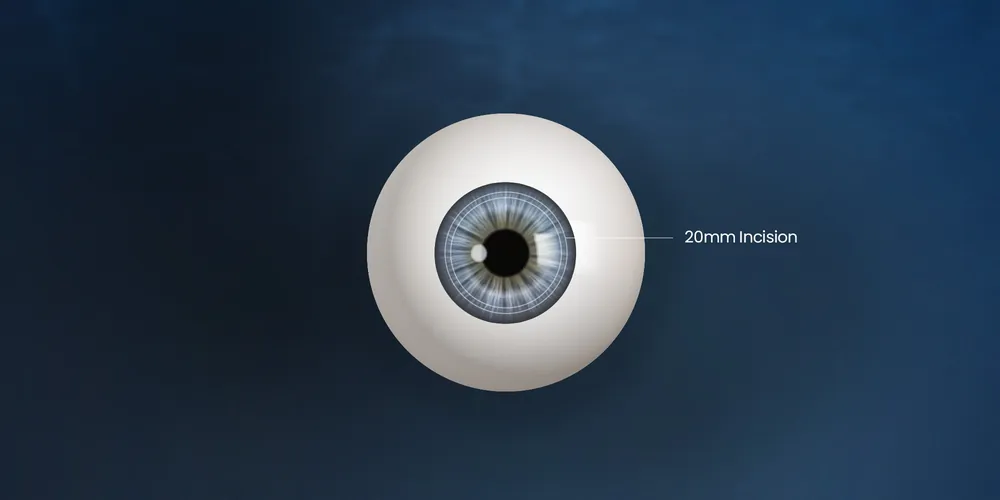
The method itself varies less than people expect: the cloudy natural lens comes out, usually through a small incision, and an artificial one goes in. Your lens choice is what you'll notice afterward. With a monofocal lens you may still need reading glasses. A multifocal lens is designed for near, intermediate and far vision, though some people notice glare and halos, especially at night, while they adapt.
I compare lens options against your exam results and how you use your eyes. Your lifestyle, your goals and how much glare and halos would bother you all decide which lens I'd propose. Someone who has read without glasses for 40 years by holding a book close may want a different target from someone who drives at night for work.
What do reviews get right about cataract recovery?
Three claims come up again and again in public reviews and forum threads.
"I could see the next day." Often true. The AAO says most people see better within a few days. Clear vision on day two still isn't a healed eye, and it doesn't cancel the drops or the activity limits.
"My cataract came back." The symptom is real, but the name is wrong. A cataract doesn't regrow on an artificial lens. The cloudiness is the capsule behind it, and it's treatable.
"It's all over in a day." That describes the operation. People sometimes borrow the idea from LASIK stories, yet LASIK recovery is a different surgery on a different part of the eye, and the timelines don't carry over.
What decides the cost of cataract surgery and recovery?
Our clinic doesn't publish a price list, and these are the factors that move the figure for you:
Our guide to cataract cost and lens choice goes further into the lens side. For your own figure, ask on WhatsApp what it would cost for your case, with both eyes or one specified.
If you've had LASIK, LASEK or any other eye surgery, mention it in your first message and ask what records to bring. One photo of an old report is enough to begin, and you can ask before booking anything. When you come, a doctor examines your eyes and recommends the lens and plan that fit your results and the way you live.
Results vary by individual, and your exam decides which procedure is proposed.
the lens type you and your surgeon settle on
one eye or both, and whether that means one trip or two
the days in Seoul for you and your companion
follow-up care at home, which the CDC notes may not be covered by your insurance if complications arise
You can usually wash carefully, but the American Academy of Ophthalmology says to avoid getting soap or water directly in the eye. Ask your surgeon when normal washing can resume, and consider having someone help you for the first few days.
Do I need to stop aspirin before surgery?
Tell your doctor during consultation if you take heart medication or blood thinners such as aspirin. Your doctor decides whether to stop them, which would be about one week before surgery. Don't stop them on your own.
When can I drive again?
Driving isn't recommended right after surgery because your vision may be temporarily affected, so use public transportation or arrange a ride. Your surgeon will tell you when it's safe, and your home country's eyesight rules for drivers still apply.
Should I bring someone with me to Seoul?
Yes, if you can. Having a companion on surgery day is strongly encouraged, and an extra pair of hands also helps with drops and luggage in the days after.
Do I still need yearly eye exams after cataract surgery?
Yes. I strongly recommend a comprehensive eye exam every year, because the retina and optic nerve can affect your vision whatever surgery you've had. That matters even more if you're very nearsighted.