Planning your trip
Planning vision correction surgery in Seoul: a trip checklist
From the first message to the check-up afterwards: the steps, the contact lens rules and the airport route, in the order you will meet them.

Laser vision correction
Worried that the Korea LASIK recovery tips you've found stop at "use your drops," and nobody says what to do if your eyes feel wrong after you've flown home?
Worried that the Korea LASIK recovery tips you've found stop at "use your drops," and nobody says what to do if your eyes feel wrong after you've flown home?
Read this before you book the return flight.
You'll know what the recovery figures cover, what can go wrong, which methods change the picture, what reviews get right, and what decides the cost, so you can set your dates and budget around your own eyes.
Hello, I'm Dr. Hyun Chul Cheon, Representative Director at Bright Eye Clinic Gangnam and an ophthalmology specialist.
We perform Custom LASIK on the Amaris Red excimer laser, which has an eye-tracking system. We have interpreters for international patients, and we're KAHF accredited for 2025–2029, Korea's program for hospitals serving foreign patients.
I wrote this because people often plan their flight around the shortest recovery number they read, and that number covers less than they assume.
Plan around three things: an eye check within 24 to 48 hours of surgery, no eye rubbing, and a home eye doctor for the months your vision may take to settle. Some eyes shouldn't have LASIK at all, and that's covered below.
If the flight home is the part you're unsure about, send your latest prescription on WhatsApp and ask how soon after LASIK you could fly.
Send your prescription and one recovery question on WhatsApp
Our own comparison lists 2–3 days of recovery for Custom LASIK. I read that as the stretch before ordinary days feel manageable again. It doesn't mean your eyes have finished healing.
The FDA's guidance on LASIK recovery describes a longer clock. Burning, itching, tearing, hazy vision and light sensitivity should ease over the first few days. Vision may take up to three to six months to stabilize, and glare, halos and trouble driving at night can persist during that time.
So you'll probably spend most of your recovery at home, far from the clinic that treated you. That's the fact worth planning around, and it's why most of the tips below concern the weeks after Seoul.
The first Korea LASIK recovery tips are about the surgery day and the check that follows it.
Count that window against our calendar. We're closed on Wednesdays and Sundays, so a Tuesday or Saturday surgery leaves only the 48-hour end of it.
Cabin air is dry, and a recently treated eye usually is too. Keep your prescribed drops in your hand luggage.
In short, these timelines come from the FDA's guidance. If the doctor who treated you gives you different dates, follow those.
The FDA also advises regular visits for at least the first six months. On a trip from abroad, most of those happen with an eye doctor near you, so make that appointment before you leave home. The CDC's medical tourism advice adds two useful steps: get copies of all your records before leaving the country, and check that follow-up care is available back home.
Don't judge your result in week two. Vision that drifts during this stretch is often dry eye, which can usually be improved with dry eye care.
| Activity | When to resume | Why it matters |
|---|---|---|
| Non-contact sports | After 1–3 days | Sweat and effort near a fresh eye |
| Makeup, lotions, creams | Up to 2 weeks | Product near the healing eye |
| Swimming, hot tubs | About 1–2 months | Water exposure |
| Boxing, football, karate | At least 4 weeks | Blows to the eye |
The question I'd want answered is what you do after dark and on weekends. Your lifestyle counts alongside corneal thickness, how much tissue can be safely removed, and astigmatism. If you box on Saturdays, or you've driven at night for a living for 20 years, I'd want that on the table before we talk about which procedure comes next.
Dr. Hyun Chul Cheon
Most early symptoms are temporary, but LASIK isn't for every eye, and some reasons only show up on measurement.
Risks and side effects to know
Common early reactions are burning, tearing, redness, glare and halos, usually easing over days to weeks. Less often, dryness lasts longer or a small amount of nearsightedness returns. The FDA notes that some complications can't be avoided for a percentage of patients, and glare or halos from large pupils can be debilitating at night or in fog. Recovery differs from person to person.
The FDA lists people who are probably poor candidates or should discuss added risk with a doctor:
See the FDA's list on when LASIK isn't for you for the full version.
If you get severe pain or symptoms that worsen, contact an eye doctor immediately, and don't wait for a scheduled visit. Having your records from Seoul with you lets that doctor see what was done.
Say you're 46, around -5.00, you drive home after dark, and you've just started holding your phone farther away. I'd want your pupils and tear film considered closely, because night vision and dryness are your two exposed points. I'd also tell you that LASIK won't stop presbyopia, so reading glasses may remain part of your life. If you accept that, I'd place your flight after the first check and hold off on night driving until you feel steady.
If night driving or sports could change your choice, send a line about them on WhatsApp with your flight window, and ask which recovery would fit that week.
Send your prescription and one recovery question on WhatsApp
Put simply, they might, since each method trades something different. Here's how our own comparison lists them:
The LASIK flap is the reason for that impact line, and it's why the rubbing warning matters. SMILE is flapless. LASEK has no flap either and is listed as resistant to external impact, at the price of a harder first week, so plan extra days in Seoul for it. Our comparison of SMILE, LASIK and LASEK goes through the differences.
If laser doesn't suit your cornea, an implanted lens may come into the conversation. It carries its own risks, such as cataract or raised eye pressure, and EVO ICL after 40 has its own considerations. I decide among these after a comprehensive exam, never from a preference alone.
| Method | Listed recovery | Listed trade-off |
|---|---|---|
| SMILE LASIK | 1 day | Price |
| Custom LASIK | 2–3 days | Weaker against external impact |
| LASEK | 5–7 days | Slow recovery, pain for a few days |
They're often accurate about the first week and less reliable about the months after it. Here's how the common claims hold up.
"I could see clearly the next morning." Plausible for many people, though that's an early reading. Vision can keep shifting for months.
"The halos went away." They often ease, but the FDA says they can persist while vision stabilizes. Someone who rarely drives at night may also notice them less than you would.
"My dry eyes were cured." I wouldn't expect it. LASIK tends to worsen existing dry eye, and contact lens discomfort is a different problem from true dryness.
"I'll never need glasses again." Not a safe assumption after 40. Presbyopia can arrive whether or not you've had vision correction. That's also why I suggest a full eye exam every year, since the retina and optic nerve affect vision too.
We don't publish a price list. These factors move the figure for you:
Our article on what moves the cost of LASIK in Korea goes further. To get the figure for your case, ask on WhatsApp what it would cost, and include your travel dates.
A photo of your latest prescription is enough for a first message on WhatsApp, along with the one recovery question on your mind, such as how soon you could swim. You can ask before booking anything. When you come to Seoul, the doctor examines your eyes and recommends the procedure that fits them and your life.
Results vary by individual, and your exam decides which procedure is proposed.
Planning your trip
From the first message to the check-up afterwards: the steps, the contact lens rules and the airport route, in the order you will meet them.
Laser vision correction
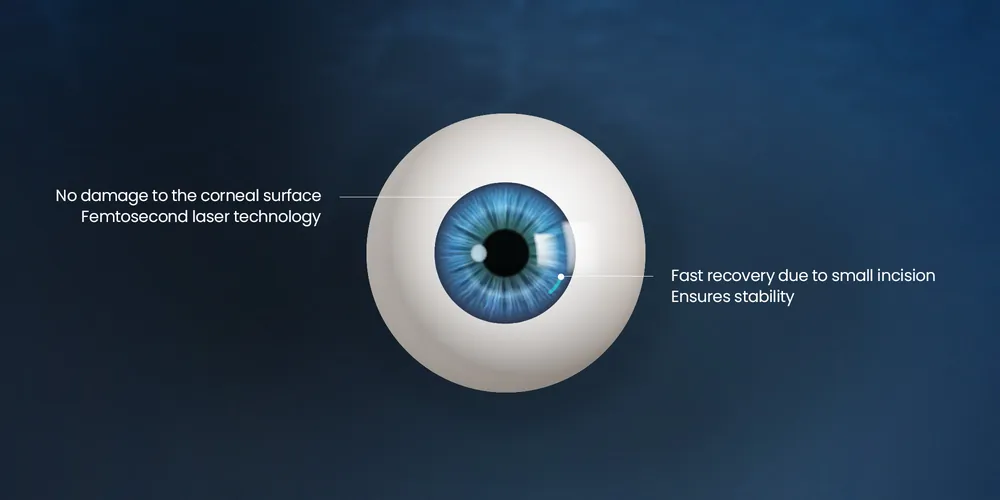
Three laser options, three different trade-offs. A side-by-side look at method, recovery time and who each one tends to suit, using the clinic's own comparison.
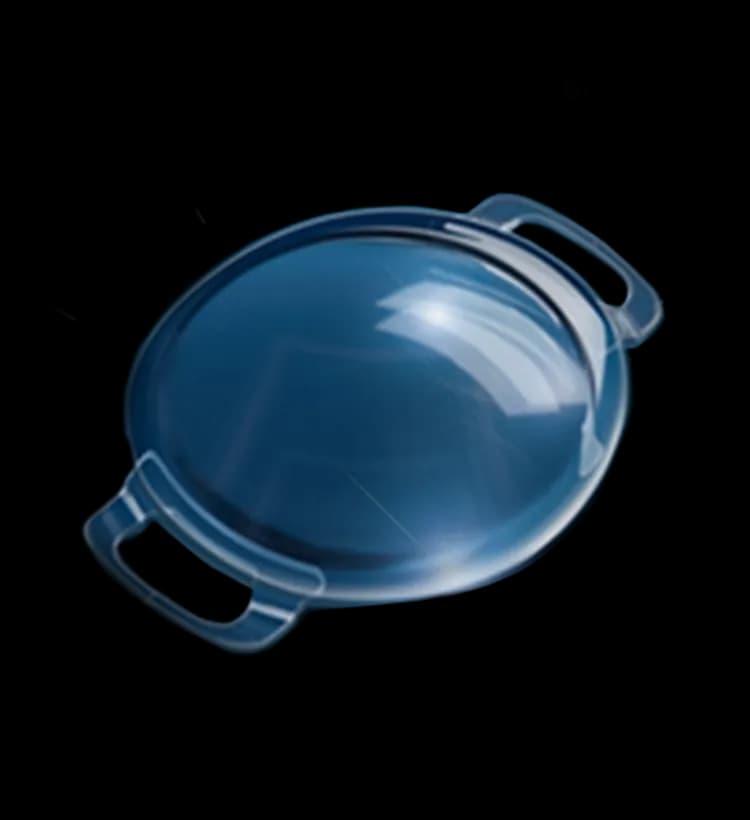
Lens surgery
EVO ICL surgery cost in Korea is set mainly by the lens type, the sizing measurements, whether both eyes are treated and your follow-up days; after about 45, compare it with presbyopia lens surgery first.