Laser vision correction
SMILE vs LASIK vs LASEK in Korea: how the three compare
Three laser options, three different trade-offs. A side-by-side look at method, recovery time and who each one tends to suit, using the clinic's own comparison.

Laser vision correction
A Korea SMILE LASIK procedure steps video squeezes a short laser phase into close-ups. Here is what you actually feel, how recovery fits a trip, and what decides the cost.
Did a Korea SMILE LASIK procedure steps video leave you more nervous than before you pressed play, wondering whether you'll watch the laser coming and whether one blink could ruin it?
Read this before you plan a trip around that fear.
By the end you'll know which steps in those clips match what you'd actually feel, what reviews get right and wrong, what decides the cost and how recovery fits a short trip, so you can judge whether SMILE suits your eyes and your budget.
Hello, I'm Dr. Hyun Chul Cheon, Representative Director at Bright Eye Clinic Gangnam. I'm an ophthalmology specialist certified in ICL and SMILE, and my record lists 50,000 SMILE cases among 140,000 vision correction surgeries.
Our clinic has three VisuMax lasers on site, including the ZEISS VisuMax 800 used for SMILE Pro, and holds a ZEISS certificate for 100,000 SMILE procedures. Interpreters are available for international patients.
I'm writing this because a two-minute edit makes people judge a whole operation by its three most uncomfortable-looking seconds.
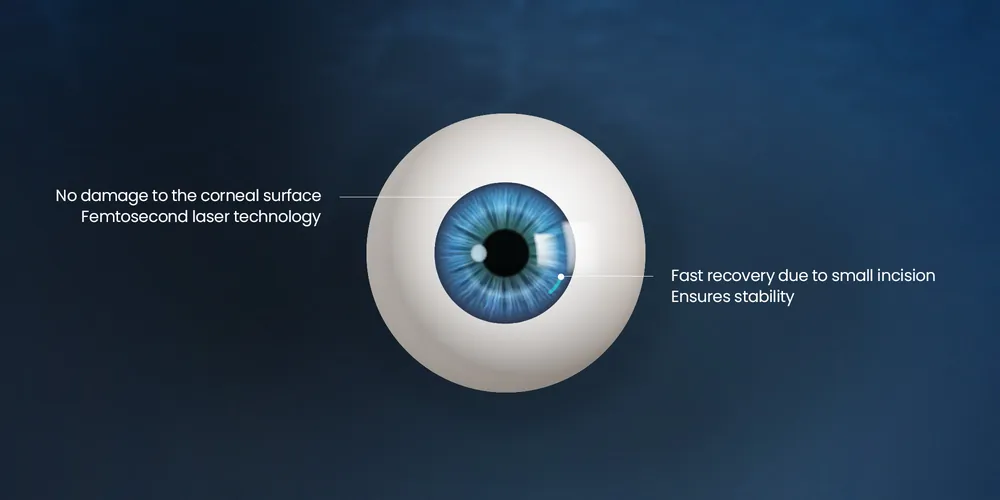
Here is what actually happens. Numbing drops go in, a small holder keeps your lids open, and you look at a light while the laser works for about 23 to 30 seconds per eye on standard SMILE, or about 10 seconds on SMILE Pro. Then the surgeon removes a thin, lens-shaped piece of corneal tissue through a small incision.
If one moment in a video is what's holding you back, send a photo of your glasses or contact lens prescription on WhatsApp and describe that moment in one line.
Send your prescription and the video moment that worries you on WhatsApp
Most of the fear in those clips comes from the camera. The footage is shot through a surgical microscope, so you see a giant eye and instruments closing in on it. From the bed, your view is much narrower: you're lying back, the surface of the eye is numb, and your only job is to look at a small fixation light.
During the laser phase on a VisuMax system, a curved contact surface rests on the eye with low suction, which is how the laser holds its position. The light you're looking at often dims or blurs for those seconds. That's expected, and your view comes back once the contact lifts.
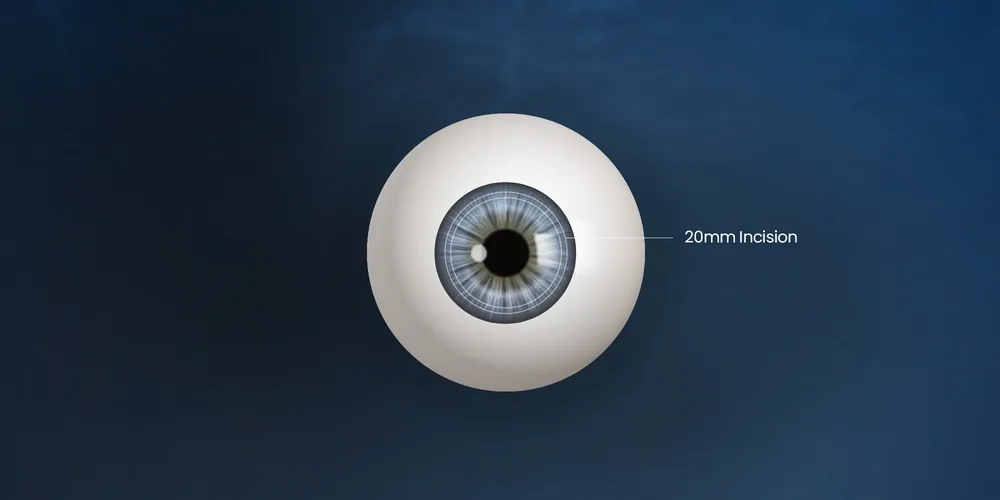
Then comes the part videos linger on. The surgeon frees the lenticule and draws it out through a small opening at the edge of the cornea, a few millimetres wide in the published description of the technique by Reinstein and colleagues. What most people notice here is pressure and touch, more than pain.
You can't blink during the procedure, and that's by design. A small device called a lid speculum holds your lids open for every vision correction procedure, so the reflex you're worried about has nowhere to go.
Eye movement is a separate issue. Your eye makes small involuntary movements you can't fully stop, and nobody expects you to. The VisuMax holds the eye with its fixation system, and the VisuMax 800 adds OcuLign and CentraLign functions that guide where the laser is placed. On the Amaris Red laser used for LASIK and LASEK, eye-tracking follows movement in real time.
In extremely rare cases where fixation is lost, the surgeon decides whether to continue safely or switch to another method such as LASEK. A video will never show you that this plan B exists, which is why I mention it.
Edited videos skip everything around the laser, and the skipped parts are where your trip planning lives. Before any surgery there's a comprehensive pre-operative exam, and that exam decides whether SMILE is the right procedure for you at all.
Contact lenses are the step travelers miss most. Stop soft lenses at least 5 days before your exam, toric or rigid lenses at least 2 weeks before, and orthokeratology lenses at least 1 month before. Lenses press on the cornea and change its shape for a while, so measurements taken straight out of contacts don't show your real eye.
On surgery day, skip makeup, perfume, hairspray and other sprays, since they can interfere with the laser equipment. Wear clothes you can lie back in easily (no hoodies, short skirts or boots). Driving afterwards isn't recommended, so use public transport or a ride, and bring a companion if you can.
The clinic is open Monday, Tuesday, Thursday and Friday from 9:30 AM to 6:30 PM and Saturday from 8:30 AM to 5:00 PM, and closed Wednesdays and Sundays, so leave those two days out when you sketch your dates.
Comment sections under these videos, and the forum threads people read next, keep repeating a handful of claims. Here's how they line up with the medicine.
Videos and reviews are both real experiences, edited for an audience. Neither one has measured your cornea.
Vision may be a little blurry on surgery day, and most people see clearly from the next day. Glare, halos and dry eye can show up while the cornea heals and usually improve within 1 to 2 weeks. Final results settle within 1 to 3 months. A follow-up check is typically done within 1 to 2 weeks after SMILE to look at healing.
That follow-up window should shape your trip more than the next-day vision does. Say you teach English somewhere in Asia, wear soft lenses at around -4.00 with a little astigmatism, and have a two-week school break. I'd want you out of contacts at least 5 days before the exam, which means starting before you fly. I'd want the follow-up inside your stay, not squeezed into the morning of your flight.
And I'd treat the first days as quiet ones: cafés, museums, short walks, rather than a windy hike or a long night out rubbing tired eyes.
If your break dates are already fixed, send them on WhatsApp together with the type of contact lenses you wear, and ask whether a follow-up visit fits inside that window.
Send your prescription and the video moment that worries you on WhatsApp
When someone asks me whether SMILE or SMILE Pro is right for them, my answer is that the comprehensive exam decides it. Corneal thickness, how much tissue can be safely removed, the health of the endothelial cells, the anatomy of the eye and the astigmatism all go into that decision, along with how you live and what you need to see. If SMILE turns out not to suit your eyes, LASEK or an ICL implant may be what I recommend, and I would rather tell you that than fit you to a video you liked.
Dr. Hyun Chul Cheon
The clinic doesn't publish a price list; each procedure is quoted on request. What moves your quote is mostly which version of SMILE you have. SMILE comes in several tiers here. Core and Triple SMILE are described as strengthening the cornea to increase stability, Prime and Quattro SMILE as replenishing moisture to reduce discomfort, and Signature SMILE adds a platelet-rich treatment. Bright SMILE Pro is performed on the newer VisuMax 800.
Your exam can move the quote too. Corneal strengthening (CXL) is commonly recommended for thin corneas or when a larger amount of tissue has to be removed, and if the exam points away from SMILE toward LASEK or an ICL, the quote changes with the procedure. If LASIK or LASEK ends up on the table, what moves a LASIK quote covers those factors.
Then there's the part that never appears on a clinic bill: the nights in Seoul between exam, surgery and follow-up. To get the figure for your own case, ask on WhatsApp what it would cost for your eyes, and name the tier that caught your attention.
SMILE changes the shape of your cornea to correct distance vision. It doesn't touch the natural lens behind it, and that lens keeps aging on its own schedule.
Presbyopia, the fading of near vision that usually shows up after 40, isn't caused by vision correction surgery and isn't prevented by it either. If you're close to that age, raise it before you choose; lens options for presbyopia are a separate conversation. Decades later, the same natural lens can cloud into a cataract, which is treated with a different surgery and its own lens choices.
The retina and optic nerve affect your sight too, so whether or not you ever have SMILE, I strongly recommend an annual comprehensive eye exam.
After SMILE, glare, halos at night and dry eye are the common temporary effects. In most cases they fade within a few weeks and are managed with artificial tears or prescribed eye drops. Less often, visual recovery is slower or a small amount of prescription remains; if needed, an enhancement can be considered, depending on how much corneal tissue is left. Serious complications such as corneal inflammation or haze are extremely rare and are usually treatable with medication when caught early.
Recovery speed and the final result differ from eye to eye.
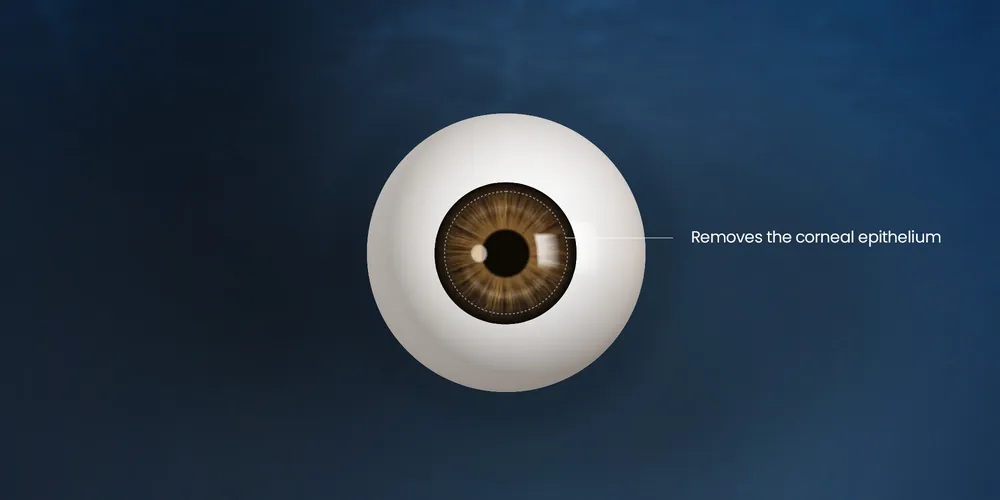
Some people should wait or choose differently. The US Food and Drug Administration lists situations where laser vision correction may not be a good idea, including a prescription that is still changing, pregnancy or breastfeeding, and conditions that affect healing. A thin or irregular cornea, which can be an early sign of keratoconus, is another reason to slow down. Mention any heart medication or blood thinner such as aspirin at consultation, since some may need to be stopped about a week before surgery.
If something feels wrong after you fly home, such as increasing pain, spreading redness or a sudden drop in vision, see an ophthalmologist where you live promptly. The US CDC's medical tourism guidance recommends bringing home copies of your medical records, so keep your surgery details and prescriptions in your carry-on.
When you've watched enough clips and want to talk about your own eyes, send a photo of your most recent eye exam report on WhatsApp along with the one question you'd ask me face to face. One photo is enough, and you can ask before booking anything. When you come to Seoul, the doctor examines your eyes and recommends the procedure that fits them.
Results vary by individual, and your exam decides which procedure is proposed.
Laser vision correction
Three laser options, three different trade-offs. A side-by-side look at method, recovery time and who each one tends to suit, using the clinic's own comparison.
Laser vision correction
The cost of laser vision correction in Korea is set mostly by which method your corneas allow, which add-on comes with it, and how your stay and follow-up are planned.
Lens surgery
Close-up vision fades because the lens stiffens, not because of laser surgery. Here is how monofocal and multifocal lenses differ, and what ArtiPlus is.