Korea SMILE LASIK Side Effects Reviews: Temporary or Lasting? Cost, Methods and Recovery
Reviews are right that glare, halos and dry eye can follow SMILE. They mislead when early weeks are read as the final result: these effects usually fade within weeks, and vision settles over 1–3 months.
Reading Korea SMILE LASIK side effects reviews and wondering whether the dry eye and night halos people describe will follow you home?
Read this before you book a flight or rule the surgery out.
You'll know which review claims hold up medically, what decides the cost, which methods suit which eyes, and how recovery usually goes, so you can weigh SMILE against your own eyes and budget.
Hello, I'm Dr. Hyun Chul Cheon, Representative Director at Bright Eye Clinic Gangnam. I'm an ophthalmology specialist, and my published record lists 140,000 vision correction cases, 50,000 of them SMILE.
The clinic has 3 VisuMax lasers on site and interpreters for international patients. It is KAHF accredited for 2025–2029, under Korea's program for hospitals serving foreign patients.
I wrote this because a review describes one person's first weeks, and readers often take it as a forecast for their own eyes.
Most reviews are right that glare, halos and dry eye can follow SMILE. They mislead when they treat the early weeks as the final result: these effects usually fade within a few weeks, and vision settles over 1–3 months.
If one review has stuck in your mind, send a photo of your latest glasses prescription on WhatsApp and name the side effect that worries you most. Your first question is then about your numbers rather than a stranger's.
Partly. Dry eye in the early weeks is real, and SMILE doesn't remove the risk. What reviews tend to leave out is why it differs so much from one person to the next.
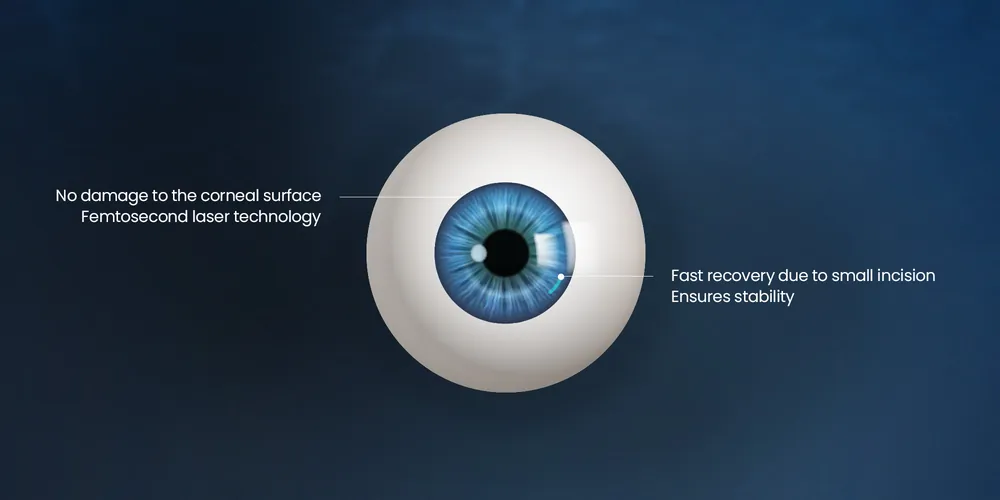
SMILE takes out a small disc of tissue, called a lenticule, through a small incision, with no flap. In a 2014 review in Eye and Vision, corneal sensation and nerve findings generally favored SMILE over LASIK in the first months. The same paper notes that dryness scores worsened early after both operations in one study, and its authors think SMILE is unlikely to eliminate dry eye, because other factors feed into it.
Those other factors are the part a review can't show you: years in contact lenses, hours at a screen, how the eye behaved before surgery. When dryness does appear, it can usually be managed with artificial tears or prescribed medication.
When I read a dry-eye complaint, my first question is how those eyes felt before the operation. Someone whose lenses already burn by evening starts from a different place than someone who has never noticed their tears. So I'd treat your own evening dryness as more useful information than any thread. Tell your doctor about it plainly, because your lifestyle and visual needs belong in the decision alongside the measurements.
Dr. Hyun Chul Cheon
Are night halos a sign something went wrong?
In the first weeks, usually not. Glare and nighttime halos are among the temporary effects we list after SMILE, and they typically improve within 1–2 weeks, sometimes taking a few weeks to settle.
So a review written in week one and describing halos around every streetlight is probably accurate about that week. It tells you little about month three. Some people do notice night glare for longer, so if you drive after dark for work, raise it before surgery rather than after.
One more thing worth separating: glare that was already there before any surgery. In an older eye, a clouding natural lens can be the cause, and no corneal procedure treats that. If this sounds like you, choosing a lens for cataract surgery may be the more relevant conversation.
What does SMILE recovery usually look like?
Vision may be slightly blurry on the day of surgery, and most people see clearly from the next day. Glare, halos and dryness typically ease within 1–2 weeks, and final results come within 1–3 months.
Reviews sometimes claim SMILE is sharper the next morning than any other laser option. The evidence doesn't support that. The review paper above describes slightly slower visual recovery with SMILE compared with LASIK as its current disadvantage, while noting that laser setting changes have improved this. If your first morning is a little soft, that alone doesn't mean anything has failed.
A second common claim is that the prescription always creeps back. Vision can drop after surgery, and when it does, the usual explanations are myopic regression or dry eye, with dry eye the more common of the two. Dry-eye blur can usually be improved with care. If regression is the cause, enhancement options such as LASEK or ICL may be considered, and how much corneal tissue remains is what limits them.
Moving during surgery: what forum threads rarely explain
Fear of blinking at the wrong second comes up in almost every thread. A lid speculum holds the eye open, so blinking isn't something you have to control. Eye movement is involuntary, which is why VisuMax systems use eye fixation.
The real event behind the horror stories is losing that fixation, known in the literature as suction loss. One series in the same review reported it in 14 eyes, or 0.8%. It is uncommon, and it has a plan: the surgeon decides whether to continue safely or convert to another method such as LASEK. I'd rather you know that exists than read about it at midnight on a forum.
Which methods suit you if SMILE reviews have you worried?
The choice comes from measurements, and I would not assume SMILE before seeing them. Corneal thickness, how much tissue can safely be removed, endothelial cell health, eye anatomy and astigmatism all count, along with how you live and work.
Say you're at minus 7.50 with astigmatism, you've worn toric lenses for ten years, and your eyes feel dry by evening. A surgeon elsewhere told you your corneas are on the thin side. I would look first at how much tissue the correction needs and what would remain. If that margin looks comfortable, SMILE stays on the table. If it doesn't, removing more tissue is the wrong trade, and I'd move to another option.
Here are the methods we offer for that conversation:
SMILE LASIK and SMILE Pro: the same lenticule technique. SMILE Pro uses the VisuMax 800, with a laser time of about 10 seconds per eye against 23–30 seconds.
SMILE tiers: the site describes Core and Triple as strengthening the cornea, Prime and Quattro as replenishing moisture, and Signature as adding a platelet-rich treatment. Your doctor recommends one after your exam.
LASEK: surface laser with no flap. Surface healing generally means a slower, more uncomfortable first few days.
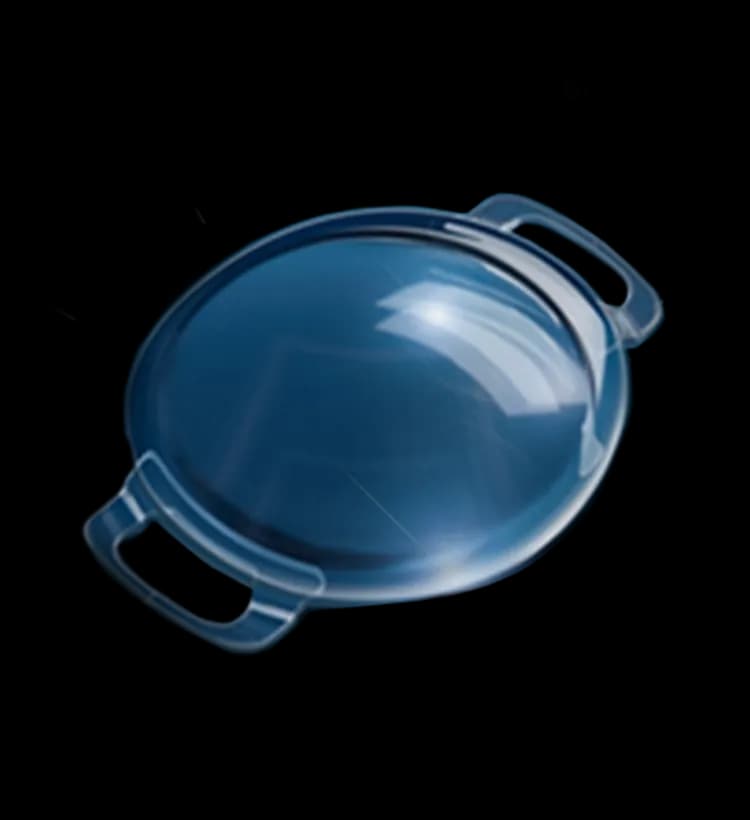
ICL implant: a lens placed inside the eye, with no corneal tissue removed. As with any intraocular surgery, risks can include raised eye pressure and cataract.
Risks and side effects to know
Common and temporary. Glare, nighttime halos and dryness, usually resolving within a few weeks.
Less common. Slower visual recovery or a small remaining prescription, which may lead to an enhancement.
Rare but serious. Corneal inflammation or opacity. These are typically treatable with medication when caught early, which is why new symptoms shouldn't sit for days.
As general guidance, these situations are reasons to hold off or think again:
If pain, sudden blur or increasing redness appears after you fly home, see a local eye doctor promptly and bring your surgical records. The CDC's medical tourism page advises getting copies of all your records before leaving and warns that complications may need treatment back home, possibly at your own expense. Results differ between people, so read every figure here as typical rather than as a promise.
If you wear contact lenses, add your lens type and how many years you've worn them to your WhatsApp message, and ask whether that history changes your options.
You have a disease or take medication that may affect wound healing, which the same page also lists.
You are pregnant or breastfeeding, since hormonal changes can shift the prescription.
Your cornea is thin or irregular on testing, which may point to keratoconus.
What decides the cost of SMILE in Korea?
The clinic doesn't publish a price list, so I can tell you what moves the figure rather than the figure itself. These are the main factors:
If you're also weighing a flap procedure, what moves the cost of LASIK covers that side. For your own figure, ask on WhatsApp what it would cost for your case, and name the procedure you have in mind.
Procedure: SMILE LASIK, SMILE Pro, LASEK or ICL.
Tier: whether corneal strengthening, moisture care or a platelet-rich treatment is part of the plan.
Your exam findings: they can rule a procedure in or out, and that changes everything downstream.
Days in Seoul: your stay has to cover the follow-up check, typically within 1–2 weeks after SMILE.
One message before you decide
Reviews can tell you what to ask. They can't tell you what your cornea will do, because they never measured it.
A single prescription photo is enough to start on WhatsApp, along with the sentence from a review that bothers you most, and you can ask before booking anything. When you do come in, the doctor examines your eyes and recommends the option that fits them.
Results vary by individual, and your exam decides which procedure is proposed.
Can SMILE correct astigmatism as well as nearsightedness?
Yes. SMILE can treat astigmatism along with nearsightedness, and higher levels can be treated now than in earlier years. Candidacy and the most suitable procedure are confirmed after a thorough preoperative evaluation.
Is a touch-up possible if a little prescription remains?
It may be. Enhancement options such as LASEK or ICL can be considered, and the amount of remaining corneal tissue is the main limit.
Will SMILE stop me from needing reading glasses later?
No. Presbyopia is age-related and isn't directly connected to whether you had vision correction surgery. It may still develop over time.
How long should I leave contact lenses out before the exam?
At least 5 days for soft lenses, at least 2 weeks for rigid or toric lenses, and at least 1 month for orthokeratology lenses. This applies to both the examination and the surgery.
How many check-ups follow SMILE surgery?
A follow-up is typically performed within 1–2 weeks. After that, more visits are optional unless your vision changes or you feel discomfort, though a comprehensive eye exam every year is strongly recommended, because the retina and optic nerve matter too.