Laser vision correction
SMILE vs LASIK vs LASEK in Korea: how the three compare
Three laser options, three different trade-offs. A side-by-side look at method, recovery time and who each one tends to suit, using the clinic's own comparison.

Laser vision correction
SMILE follows the same steps for everyone: exam, numbing drops, seconds of laser, lenticule removal. The cost moves with the laser, the add-on tier and what your cornea allows.
Are you wondering whether the Korea SMILE LASIK procedure steps and cost you've pieced together online will still hold once someone actually measures your eyes?
Give this ten minutes before you book a flight.
You'll come away knowing what each step on surgery day involves, what decides the cost for your eyes, what reviews get right and wrong, and how recovery fits a trip. That's enough to tell which SMILE option suits your eyes, your screen hours and your budget.
Hello, I'm Dr. Hyun Chul Cheon, Representative Director at Bright Eye Clinic Gangnam. I'm an ophthalmology specialist certified in ICL and SMILE, and my record lists 50,000 SMILE cases.
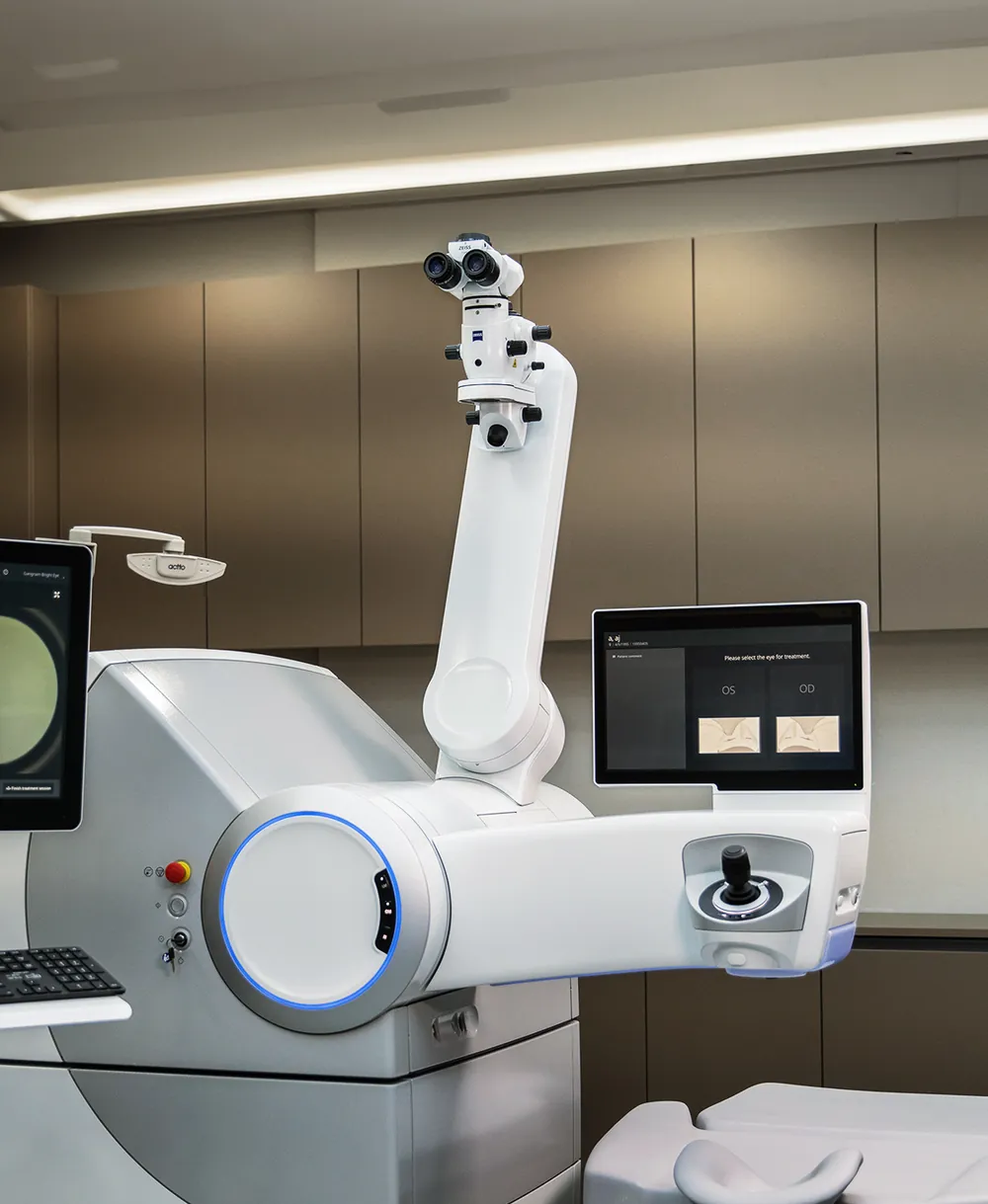
We have three VisuMax lasers on site, including the ZEISS VisuMax 800 used for SMILE Pro. Interpreters are available for international patients, and the clinic is KAHF accredited for 2025–2029 under Korea's program for hospitals serving foreign patients.
I wrote this because people often compare SMILE quotes as if the laser were the whole bill, then feel caught out when the exam changes the plan.
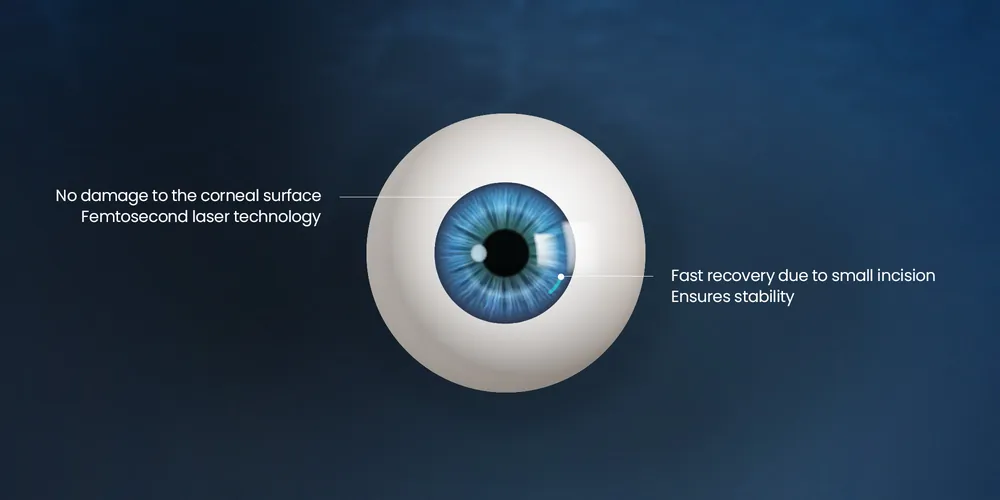
The steps are the same for everyone: an exam, numbing drops, well under a minute of laser per eye, and removal of a thin disc of tissue through a small incision. The cost moves with which laser you're treated on, which tier of add-on care fits your eyes, and whether your cornea calls for strengthening or a different procedure.
If you have a recent prescription or eye-exam printout, send a photo of it on WhatsApp with one question: would these numbers point toward SMILE or SMILE Pro? It's the quickest way to make the question about your eyes.
Everything starts with the exam. Corneal thickness, how much tissue can be safely removed, the health of the corneal endothelial cells, the eye's anatomy and astigmatism decide which procedure fits. To me those measurements outrank anyone's preference, mine included.
Contact lenses reshape the cornea for a while, so stop them before the exam: at least 2 weeks for hard or toric lenses, at least 5 days for soft lenses, and at least a month for ortho-K lenses. If you take aspirin, another blood thinner or heart medication, mention it at the consultation, since some need pausing about a week before surgery.
On surgery day, skip makeup (basic toner or lotion is fine), perfume and hairspray, because they can interfere with the laser equipment. Wear clothes you can lie down in comfortably; a hoodie or boots get in the way.
In the chair, SMILE is generally done with numbing eye drops while you stay awake. A small device called a lid speculum holds your eye open, so blinking isn't something you have to manage. Your eye still makes small involuntary movements, and the laser's fixation and tracking system is there to compensate for them.
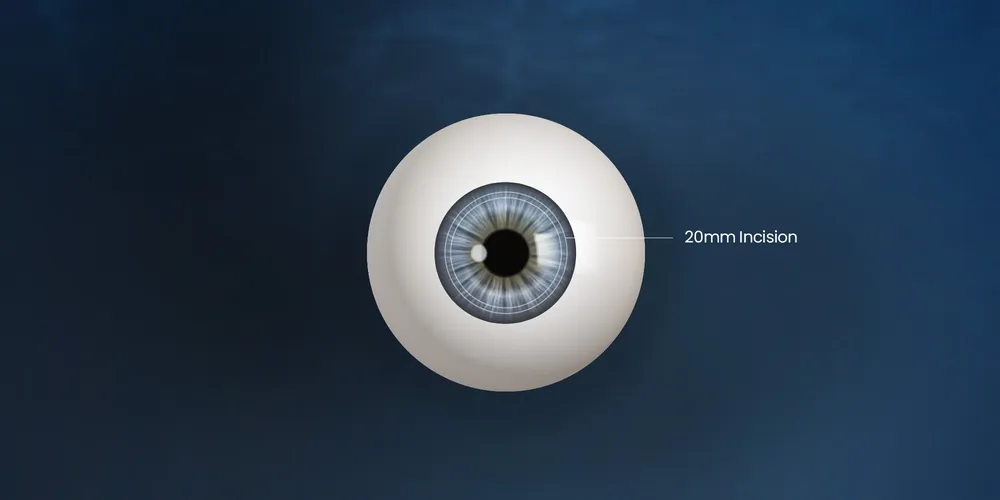
The femtosecond laser then shapes a thin lens of tissue, the lenticule, inside the cornea. On the original VisuMax that takes about 23–30 seconds per eye; on the VisuMax 800 used for SMILE Pro, about 10 seconds. The lenticule comes out through a small incision, and removing it is what changes the cornea's focusing power.
Afterwards your vision may be slightly blurry, so don't plan to drive. Take public transport or a ride back, and bring a companion if you can.
An online figure usually assumes an average eye. Yours gets measured, and these are the things that then shape the quote.
The laser: SMILE or SMILE Pro
SMILE and SMILE Pro are the same lenticule surgery. The difference is the machine. SMILE Pro runs on the VisuMax 800, which has a faster femtosecond laser, enhanced eye-tracking and centration, and improved astigmatism correction. If astigmatism is a large part of your prescription, expect this choice to come up.
The tier of add-on care
The clinic offers SMILE in several tiers that add corneal strengthening, moisture replenishment or a platelet-rich treatment to the surgery. The next section matches them to eyes.
What your cornea allows
If your cornea is thin, or your correction needs a lot of tissue removed, corneal strengthening (CXL) is commonly recommended: riboflavin applied to the cornea, followed by controlled UV light. If SMILE isn't suitable at all, LASEK or an ICL implant may be recommended instead, and that's a different procedure with its own cost. If you're weighing those, read how SMILE, LASIK and LASEK compare; for the flap-based option, what moves the cost of LASIK covers the details.
Days in Seoul and follow-up
After SMILE, a follow-up check is typically done within 1–2 weeks. Whether you stay in Seoul for it shapes how many hotel nights and leave days you need.
Put together, the Korea SMILE LASIK procedure steps and cost rest on the same exam numbers. The clinic doesn't publish a price list, so the figure for your case comes as a quote. Ask on WhatsApp what it would cost for your eyes, naming the laser and tier you're curious about.
In short, these are the tiers as the clinic's page describes them. The right-hand column is how I'd think about where each one might come up. The doctor recommends one after your exam.
| Option | What it adds | Where I'd think about it |
|---|---|---|
| Core SMILE, Triple SMILE | Strengthens the cornea to increase stability | Thinner corneas or larger corrections |
| Prime SMILE, Quattro SMILE | Replenishes moisture to reduce discomfort | Dry eyes, long screen hours |
| Signature SMILE | Platelet-rich treatment with 8 times more concentrated platelets | Ask what it would add for your eyes |
| Bright SMILE Pro | Performed on the VisuMax 800 by a doctor with 10+ years of SMILE experience | Astigmatism, shorter laser time |
Please don't choose a tier from a menu before anyone has measured your eyes. Two people with the same prescription can have very different corneas and tear films, and those differences are what the add-ons address. I'd rather you arrive with an open question than a fixed order, because your lifestyle and visual needs count alongside the scans.
Dr. Hyun Chul Cheon
Say you're 45, around -4.50 with some astigmatism, looking at screens most of the day, and your eyes feel dry by mid-afternoon. You have about ten days off and a long flight home to Sydney.
Here's how I'd reason. That's where a moisture-focused tier might enter the conversation. The astigmatism makes SMILE Pro's improved astigmatism correction worth discussing. Corneal thickness then decides whether strengthening belongs in the plan.
Then there's age. SMILE corrects distance vision. Presbyopia, the stiffening of the eye's own lens that makes close work harder, has nothing to do with whether you've had vision correction, and it arrives anyway. If you already reach for reading glasses, it helps to know what presbyopia lens surgery options look like. If an exam ever shows early lens clouding, what sets the cost of cataract surgery becomes the more relevant read. For many people at 45 with a clear lens, SMILE for distance now and reading glasses later still makes sense.
If this sounds like you, put two details in your WhatsApp message: roughly how many hours a day you spend on screens, and whether you already use reading glasses. Those are the two facts that changed the reasoning above.
Forum threads and review sites repeat a few claims about SMILE. Some hold up better than others.
“I could see the next day.” Mostly true. Vision may be slightly blurry on the day itself, and most people see clearly from the next day. Glare, halos and dryness typically settle over 1–2 weeks, and final results arrive within 1–3 months.
“No flap means no dry eye.” Not true. Dry eye is one of the common temporary effects after SMILE. The small incision is thought to disturb fewer corneal nerves than a LASIK flap, which is part of the rationale in Reinstein and colleagues' review of the technique, but fewer is not none.
“The laser takes ten seconds, so it's a quick visit.” The laser part really is that short on SMILE Pro.
“The price I saw online is what I paid.” That holds only when the online figure matched the laser, tier and cornea in question. When a quote shifts after an exam, it's usually because one of those shifted.
The day of surgery is usually a little blurry. Most people see clearly the next day, temporary glare, halos or dryness typically improve within 1–2 weeks, and vision reaches its final level within 1–3 months. Recovery speed and outcomes vary with your eyes and your starting prescription.
When you count days, count clinic days. The clinic is open Monday, Tuesday, Thursday and Friday from 9:30 AM to 6:30 PM, and Saturday from 8:30 AM to 5:00 PM, with lunch from 1:00 to 2:00 PM. It's closed on Wednesdays and Sundays, so landing on a Tuesday night means your first possible exam day is Thursday.
Because the SMILE follow-up check typically falls within 1–2 weeks, ask at booking whether yours can happen before your flight, and leave a spare day in case. Annual comprehensive eye exams are worth keeping up afterwards as well, since eye health involves the retina and optic nerve, not just the cornea.
The common reactions are temporary: glare, halos at night and dry eye. In most cases they settle within a few weeks and are managed with artificial tears or prescribed drops. Less often, visual recovery is slower or a small residual prescription remains, and an enhancement can be performed if needed. Serious complications such as corneal inflammation or opacity are extremely rare and are typically treatable with medication when caught early.
Some people should wait or choose differently. The US FDA's guidance on when LASIK is not for you lists a prescription that is still changing, pregnancy or nursing, and conditions or medications that affect healing. It's written about LASIK, but in general the same reasoning applies to SMILE. A thin or irregular cornea, or signs of keratoconus, is another reason to slow down and look at other options.
If something feels wrong after you're home, such as growing pain, vision getting worse, or redness that increases, see an ophthalmologist promptly and bring your records. The US CDC's medical-tourism guidance advises getting copies of your medical records to take home, so ask for your exam and surgery records before you leave Seoul.
If the measurements say SMILE isn't the right fit for your cornea, I'd rather tell you that than squeeze you into it. LASEK or an ICL implant may be the better conversation then, and each has its own trade-offs to weigh.
Dr. Hyun Chul Cheon
Write on WhatsApp with your travel dates and the one question that matters most to you, for example: what would SMILE cost for my eyes, and is SMILE Pro worth discussing for my astigmatism? One photo of your latest prescription is enough to start, and you can ask before booking anything. When you come to Seoul, the doctor examines your eyes and recommends the SMILE option, or the alternative, that fits them.
Results vary by individual, and your exam decides which procedure is proposed.
Laser vision correction
Three laser options, three different trade-offs. A side-by-side look at method, recovery time and who each one tends to suit, using the clinic's own comparison.
Laser vision correction
The cost of laser vision correction in Korea is set mostly by which method your corneas allow, which add-on comes with it, and how your stay and follow-up are planned.
Lens surgery
Close-up vision fades because the lens stiffens, not because of laser surgery. Here is how monofocal and multifocal lenses differ, and what ArtiPlus is.